
The Bertrand family
Our guide to organic certifications
Beyond the pursuit of excellence in every bottle, Gérard Bertrand wines stand out through a series of certifications that reflect their commitment to sustainability, respect for the environment and ethics. If you feel a little lost among all the different certifications, here is a guide to understanding what a label means in viticulture and winemaking.
Certified Organic: A Commitment to the Earth
Combining the production of excellent organic wines with respect for nature is a strong commitment for the company. Today the world leader in organic wines, all of our vineyard plots are certified at least to AB standard.
-
What is an organic wine?
An organic wine is a wine produced according to the principles of organic farming, meaning without herbicides, without GMOs and without other chemical fertilisers. This involves applying these principles to the entire winemaking process, from growing the vines (viticulture) to transforming the grapes into wine (vinification). An organic wine comes from grapes that are themselves certified organic, as are all the additions (inputs) necessary for the proper transformation of the grapes into wine (yeasts, fining agents, etc.).
Obtaining the organic "AB" label requires compliance with a strict set of specifications established by the European Union (Regulation No. 203/2012).
Recently, the CAB label (Conversion to Organic Farming) has appeared and allows the identification of winemakers in the Occitanie region who have undertaken the process of converting their vines to organic farming.
-
What are the benefits of an organic wine?
The main advantage of a quality organic wine, just like a biodynamic wine, is that it expresses the full potential of the fruit. The grape, having been treated with care throughout its development, delivers all its flavours.
It is generally observed that organic wines, when they are of quality, deliver finer and more delicate flavours than a conventional wine. The balance of flavours is remarkable; it is a wine that relies less on alcohol than a conventional wine.
Another typical taste characteristic of organic wines from the Languedoc is their minerality. The explanation? An untreated grape concentrates significantly more trace elements and minerals. This is what allows, when tasting the wine, that mineral, fresh, almost saline flavour to be found, particularly in white wines.
Discover the full range and collection of organic wines from Gérard Bertrand.
Certified Biodynamic: A Holistic Approach
While organic farming and its "AB" label are now widely known, biodynamic wine and its "Demeter" label are far less so. And yet, biodynamics is a farming method that pushes the concept of "all natural" even further than organic farming.
This farming approach seeks symbiosis with nature, with the primary consequence of no longer needing chemical products to protect it (pesticides) or feed it (fertilisers). Biodynamics also takes into account the influence of the planets, and in particular the lunar calendar.
Furthermore, unlike conventional wines and organic wines, a biodynamic wine receives very few oenological inputs during the winemaking phase.
The Demeter label
Today, while many winemakers pride themselves on practising biodynamic farming of their vines, only obtaining the Demeter label can certify compliance with a strict and fully transparent set of specifications. Present in 53 countries, it builds on the organic label's specifications by adding more stringent measures. Demeter wines therefore hold the organic "AB" label as a matter of course.
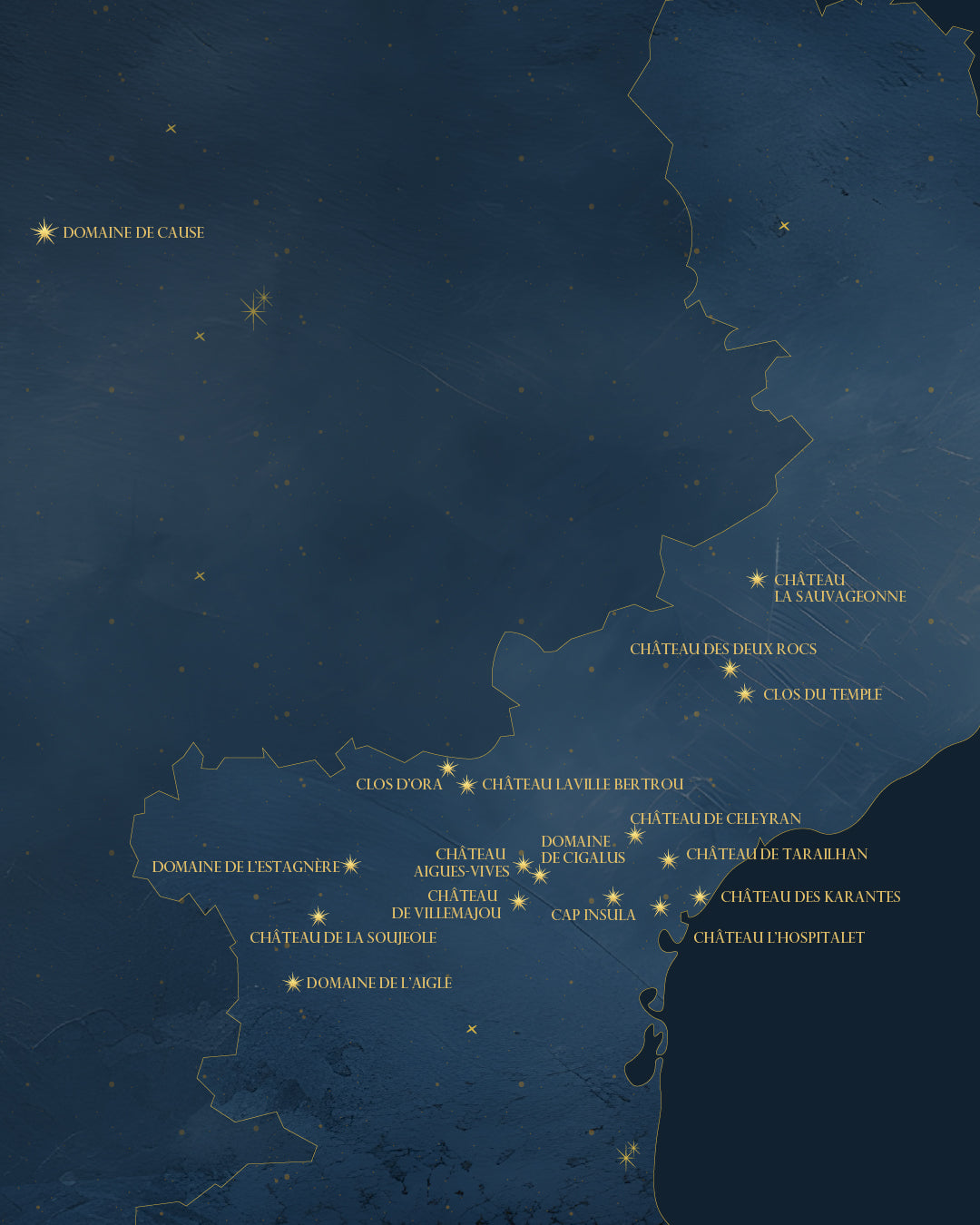
Biodynamic agriculture, through the Demeter label, thus represents a higher level of requirement in terms of adhering to a more natural and more artisanal production process. This is notably the case for Clos d'Ora (organic and Demeter red wine), and Clos du Temple (organic and Demeter rosé wine), two estates cultivated biodynamically that produce an exceptional wine and use animal traction (a mule) to work the soil.
Discover the full range and collection of biodynamic wines from Gérard Bertrand.
Vegan Certified: An Ethical Choice
The "Vegan" label assures consumers that no animal-derived products were used during the process of making the wine. Products commonly used in winemaking (gelatine, egg white, casein, etc.), particularly during the "fining" stage, are entirely prohibited.
This approach is in keeping with the ethics of our brand, offering an option that respects animal rights to wine lovers. Vegan wines are the ideal choice for those seeking a tasting experience without ethical compromise.
Discover the full range and collection of "Vegan" wines from Gérard Bertrand.
Certified Bee Friendly: Preserving Pollinators
The "Bee Friendly" label highlights producers with positive environmental farming practices that respect and integrate bees and pollinators within their very own crops. Bee Friendly certified wines are a statement of intent in favour of protecting viticultural ecosystems.
Discover the full range and collection of "Bee Friendly" wines from Gérard Bertrand.
No Added Sulphites: Authenticity and Purity
At Gérard Bertrand, we have acquired sufficient experience and understanding of our grape varieties to protect our wine from oxidation naturally, without resorting to the addition of sulphites.
The "No Added Sulphites" certification reflects a commitment to producing pure wines that highlight the authentic character of the terroir. The absence of added sulphites meets the expectations of consumers seeking more natural wines while preserving the freshness and quality of the cuvées.
Discover the full range and collection of "Sulphite-Free" wines from Gérard Bertrand.




Leave a comment
This site is protected by hCaptcha and the hCaptcha Privacy Policy and Terms of Service apply.