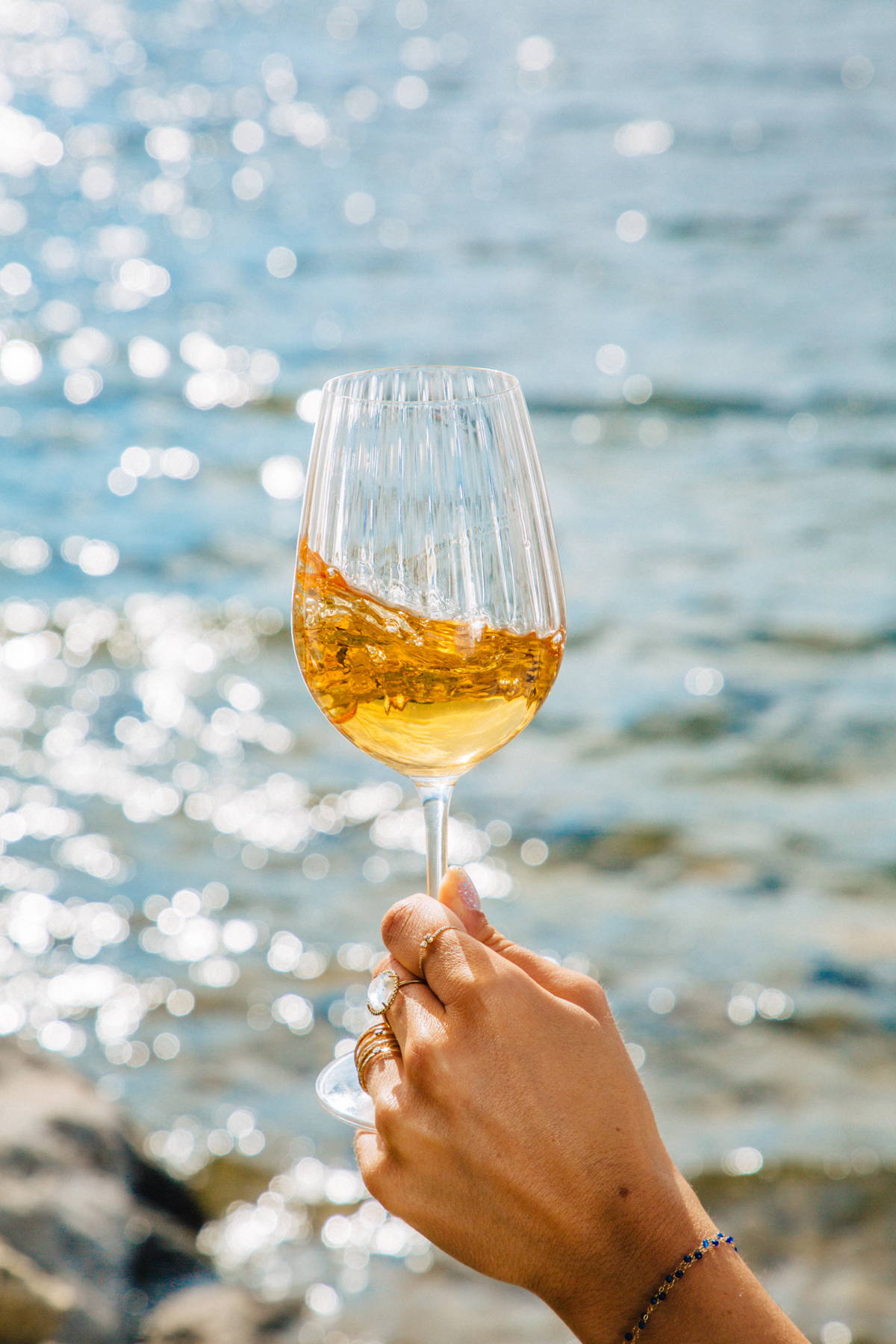
What is Crémant de Limoux?
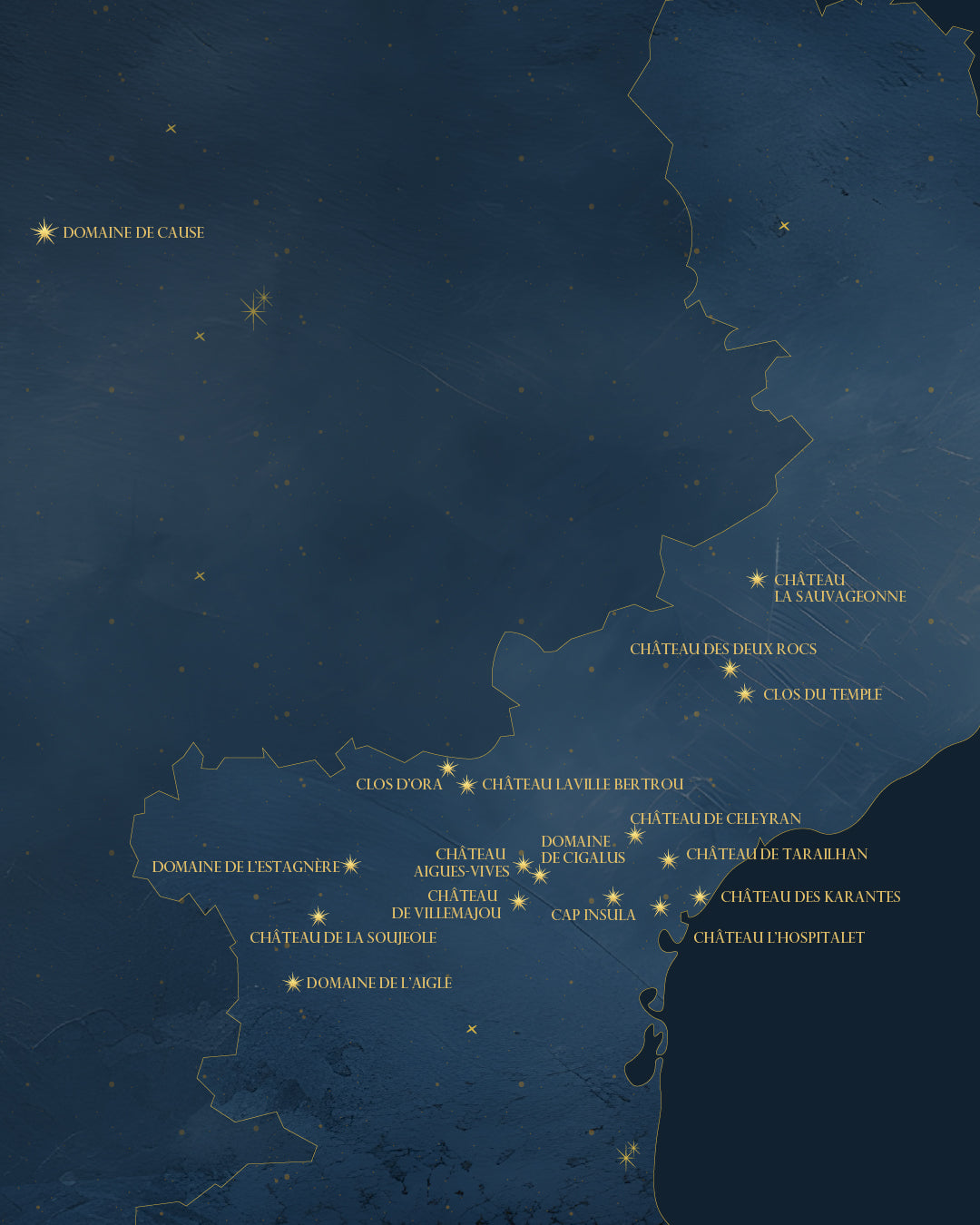
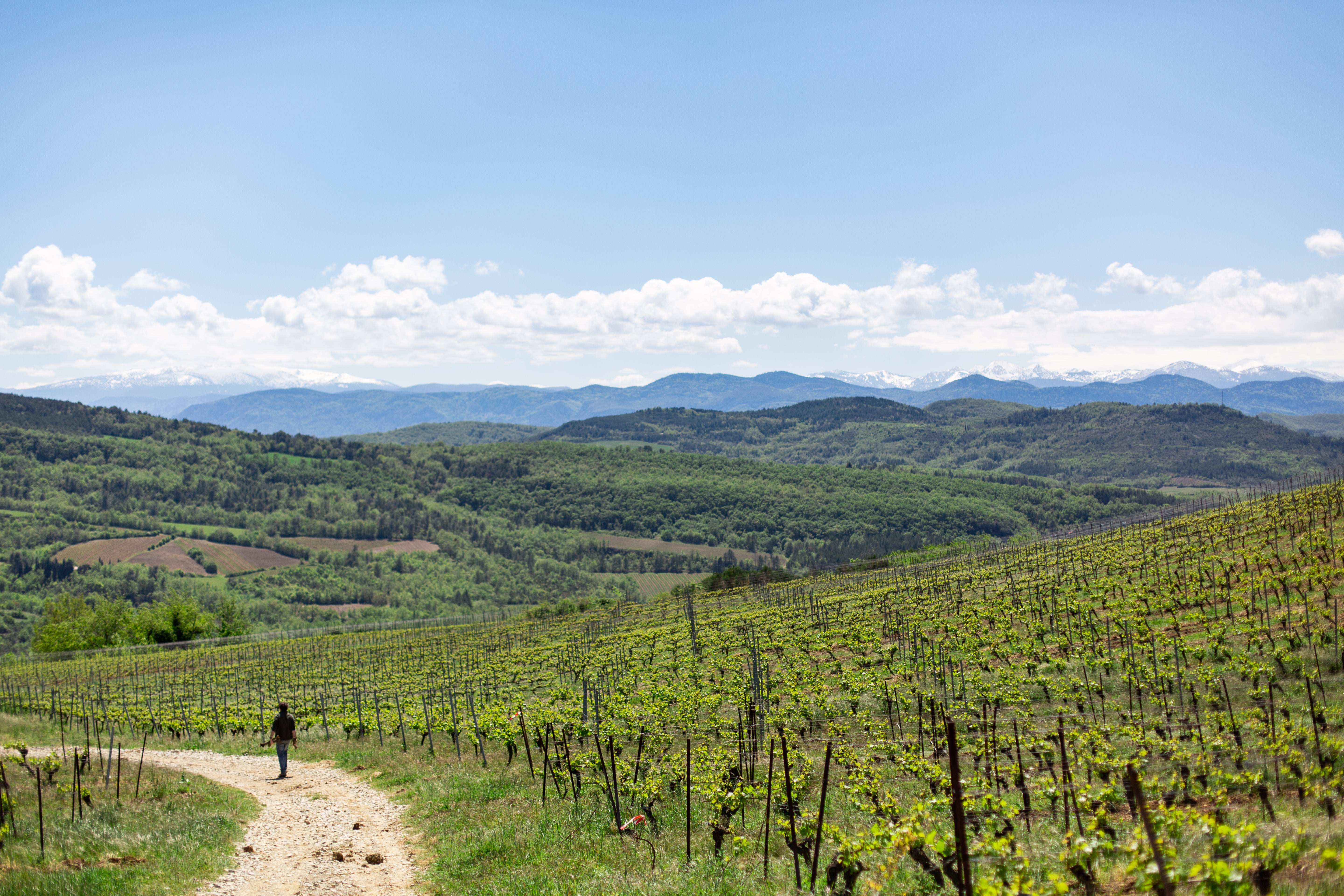
Crémant de Limoux is a protected designation of origin covering 41 communes in the upper Aude valley, around Limoux at the foot of the Pyrenees. Its transitional climate, where oceanic and Mediterranean influences meet, brings cool nights that preserve the grapes’ acidity and sunshine that ensures they ripen. This balance gives Crémant de Limoux its freshness and fine bubbles.
The appellation differs from its two neighbours, Blanquette de Limoux and Blanquette méthode ancestrale. They share the same history, but not the same grape varieties or production methods: Crémant uses the traditional method and a wider range of grapes for a more structured expression.
A history dating back to 1531: the abbey of Saint-Hilaire
The history of Limoux’s sparkling wines is linked to the Benedictine abbey of Saint-Hilaire, a few kilometres from Limoux. Its earliest written record dates to AD 825 — the year that gave our cuvée its name, Héritage Year 825. Local tradition dates the abbey monks’ discovery of a naturally sparkling wine to 1531. A document from 1544 already attests to the renown of Blanquette de Limoux.
This story is part of the Limoux region’s heritage: it reminds us that sparkling winemaking has deep roots in the Aude valley. The Code Rouge pays tribute to it by evoking the “World’s First Brut” made by the monks of Saint-Hilaire.
The traditional method, step by step
- Base wine : the grapes are made into still wine, then blended.
- Second fermentation : the wine is bottled with the ingredients needed for a second fermentation, which naturally creates the bubbles.
- Ageing on lees : the bottles rest on their lees, refining the texture and developing notes of brioche or dried fruit. The Ballerine cuvée spends 36 months on its lees.
- Riddling and disgorgement : the sediment is moved towards the neck of the bottle, then expelled.
- Dosage : adding a dosage liqueur adjusts the final balance (brut, extra-brut…).
Chardonnay, Chenin, Mauzac, Pinot Noir: the role of each grape variety
The Chardonnay often forms the backbone of the blend, bringing finesse and notes of citrus and white flowers. The Chenin brings freshness and tension. The Mauzac, a historic Limoux grape variety, gives it a distinctive local character. The Pinot Noir adds structure and fruit, and can be used to make rosé Crémants.
Our Crémants de Limoux at a glance
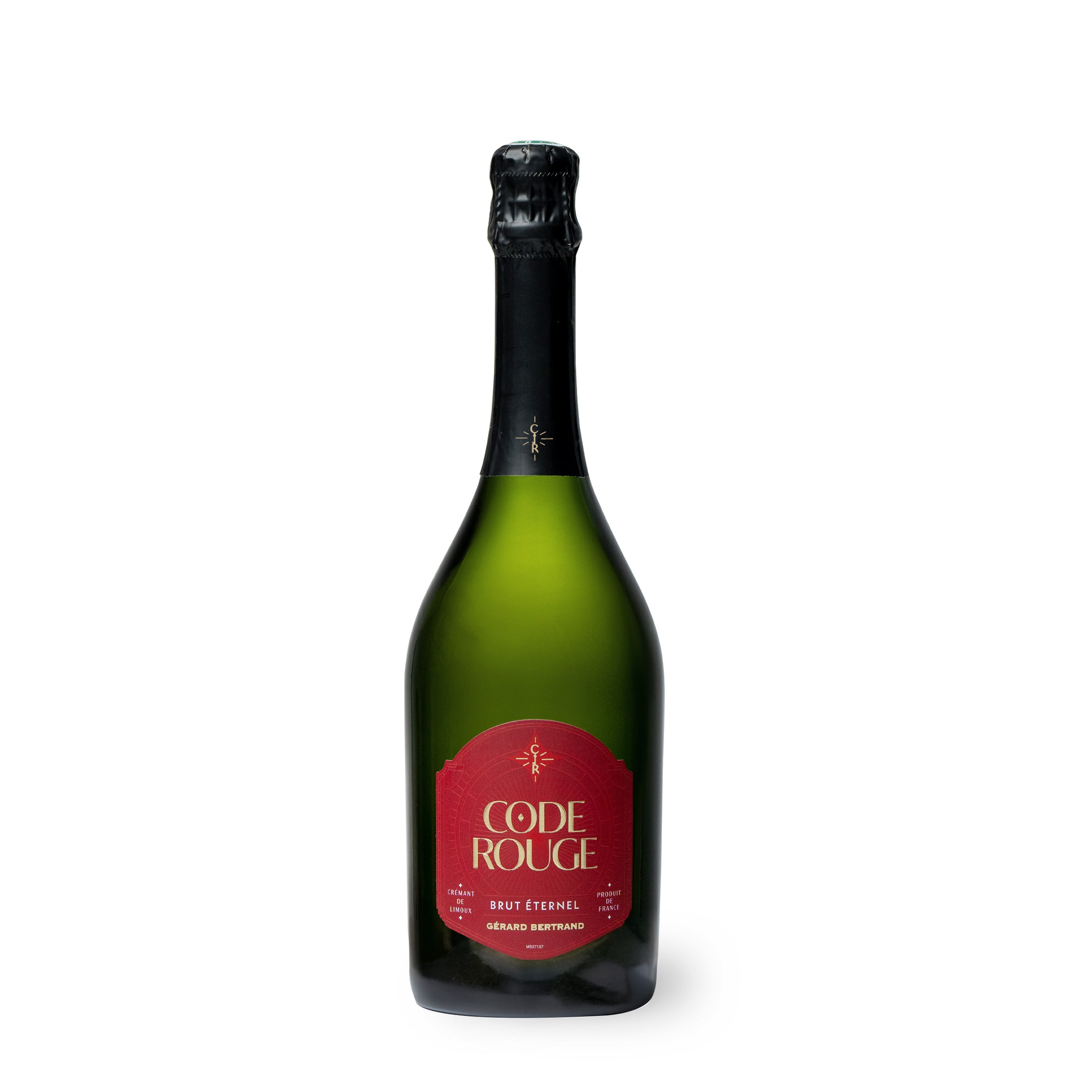
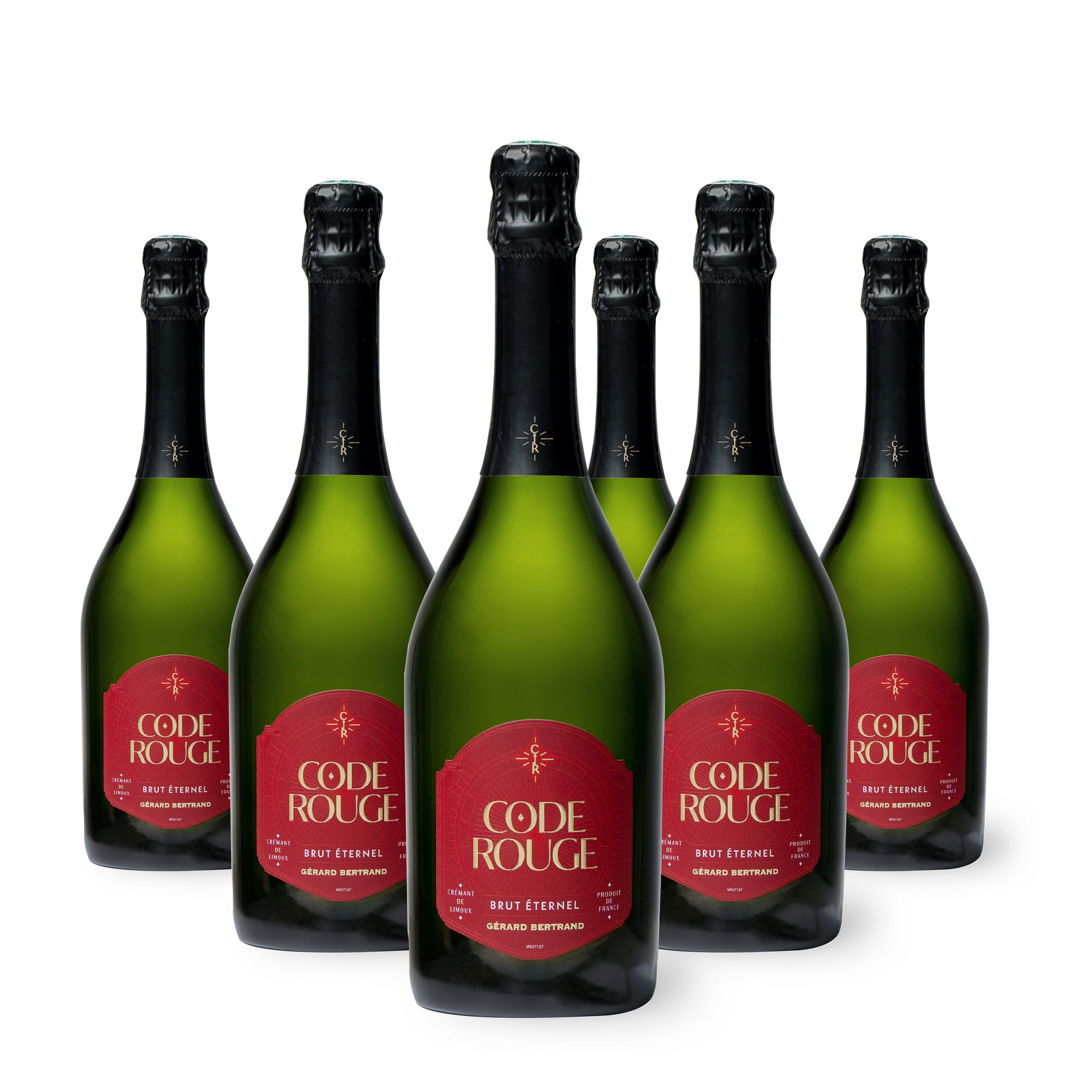
- Code Rouge Brut Éternel — blanc de blancs (Chardonnay, Chenin, Mauzac), from Limoux terroirs with oceanic climates, aged on lees for at least 12 months.
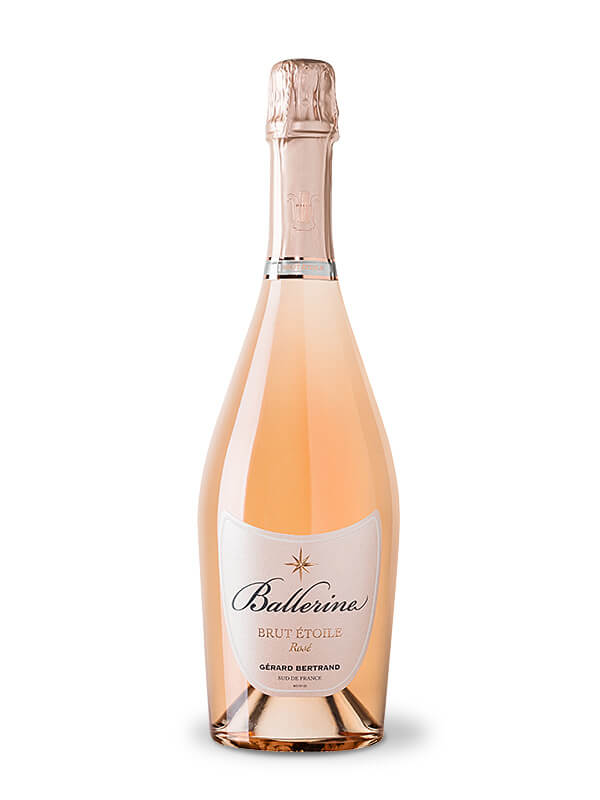
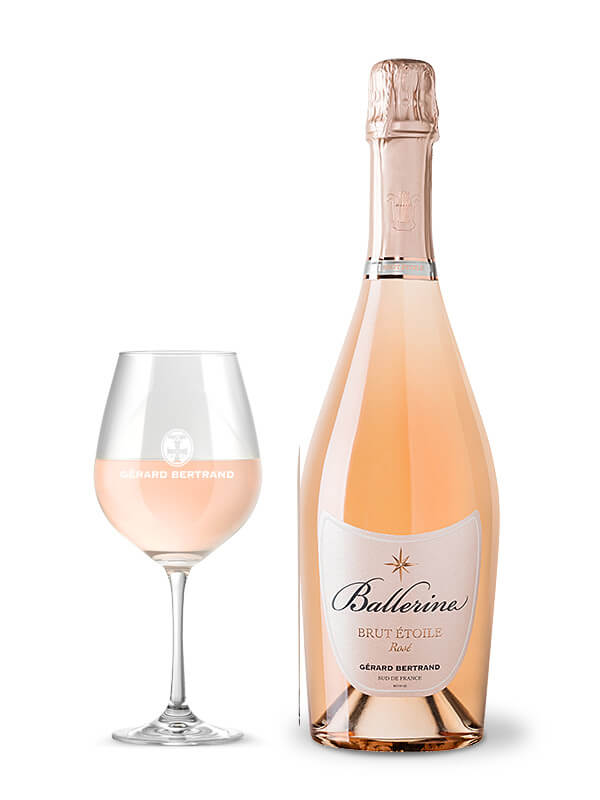
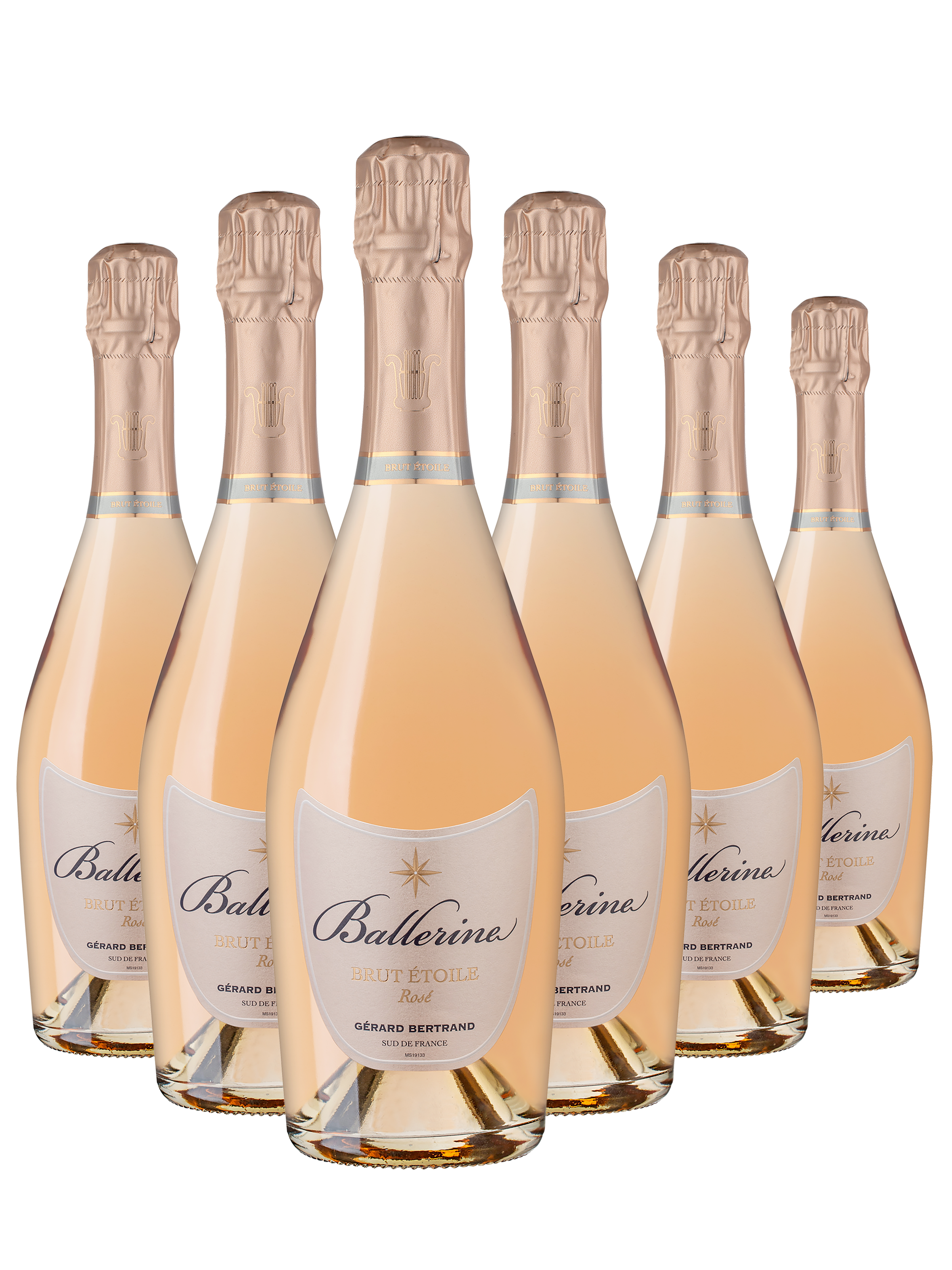
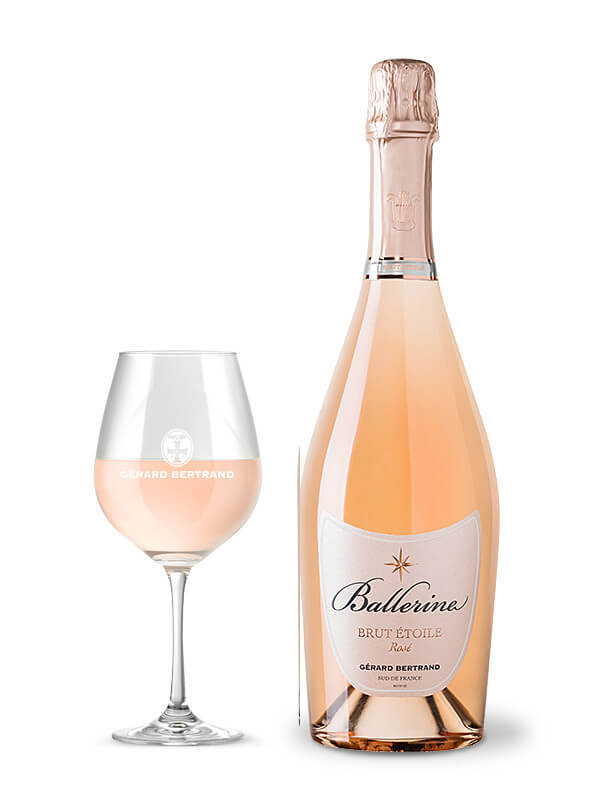
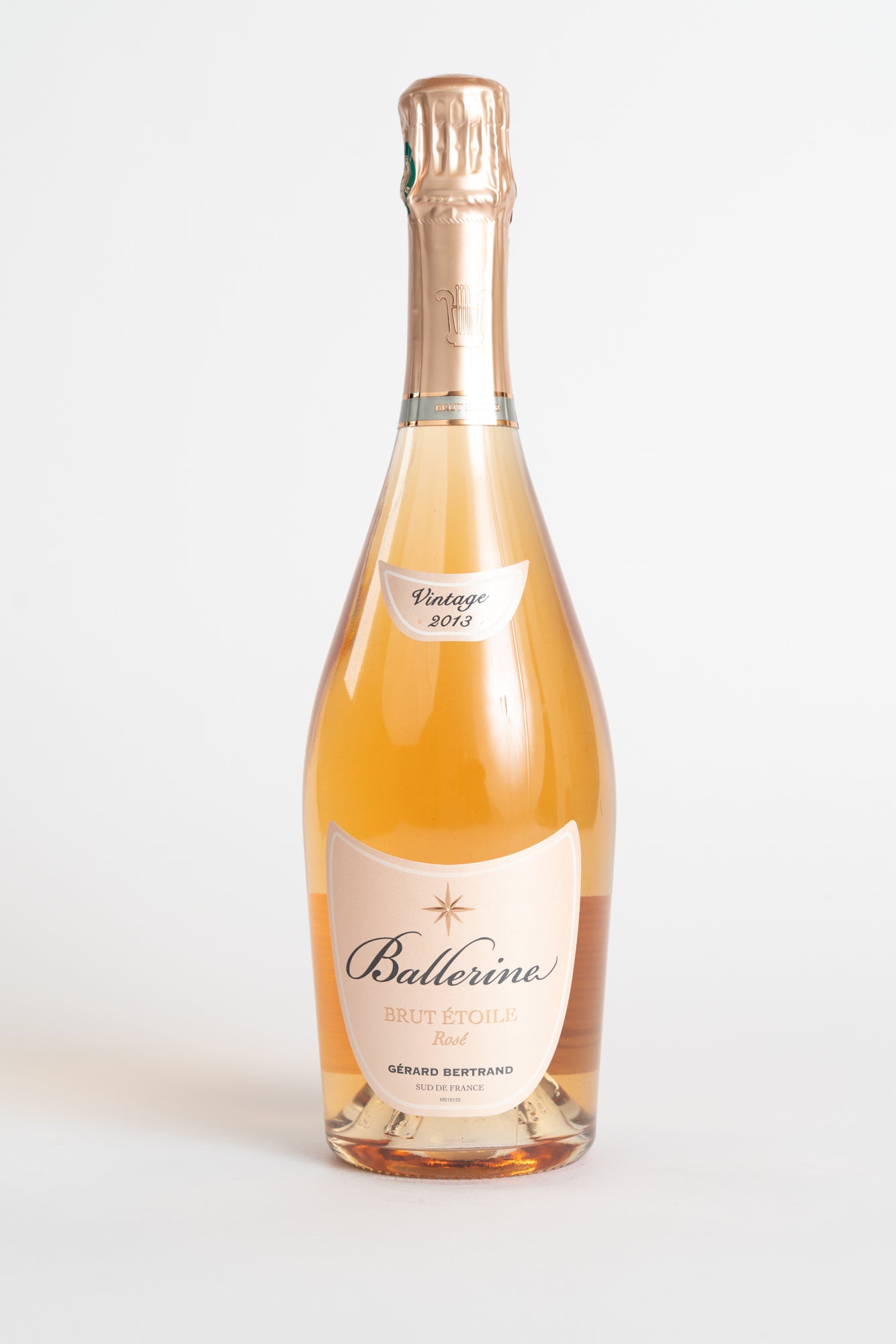
- Ballerine Brut Étoilé — rosé (Chardonnay, Pinot Noir), aged on lees for 36 months, 90 points from Wine Spectator.
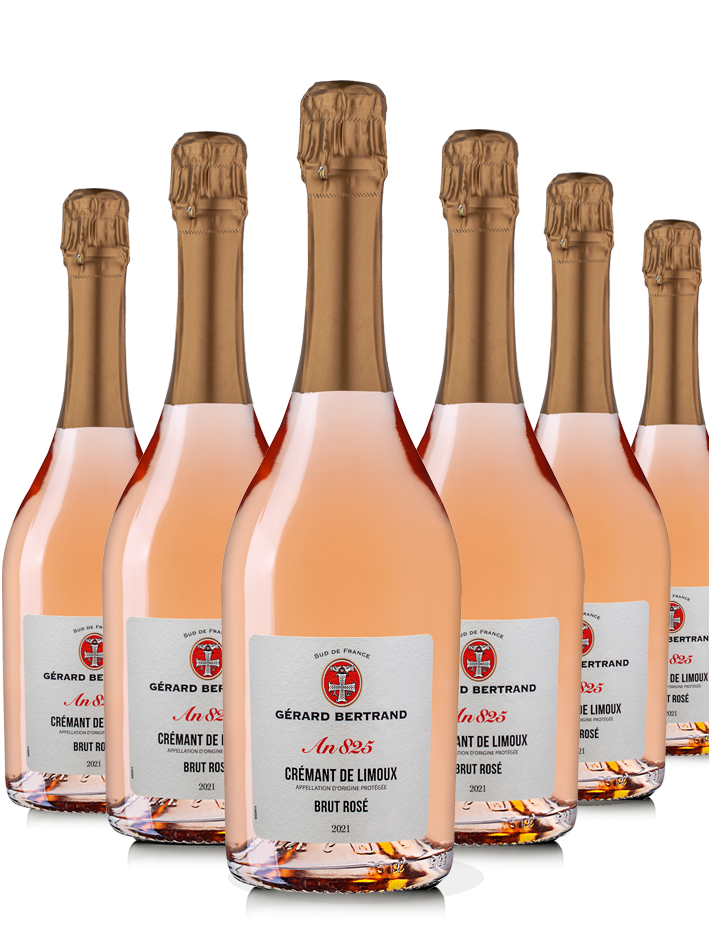
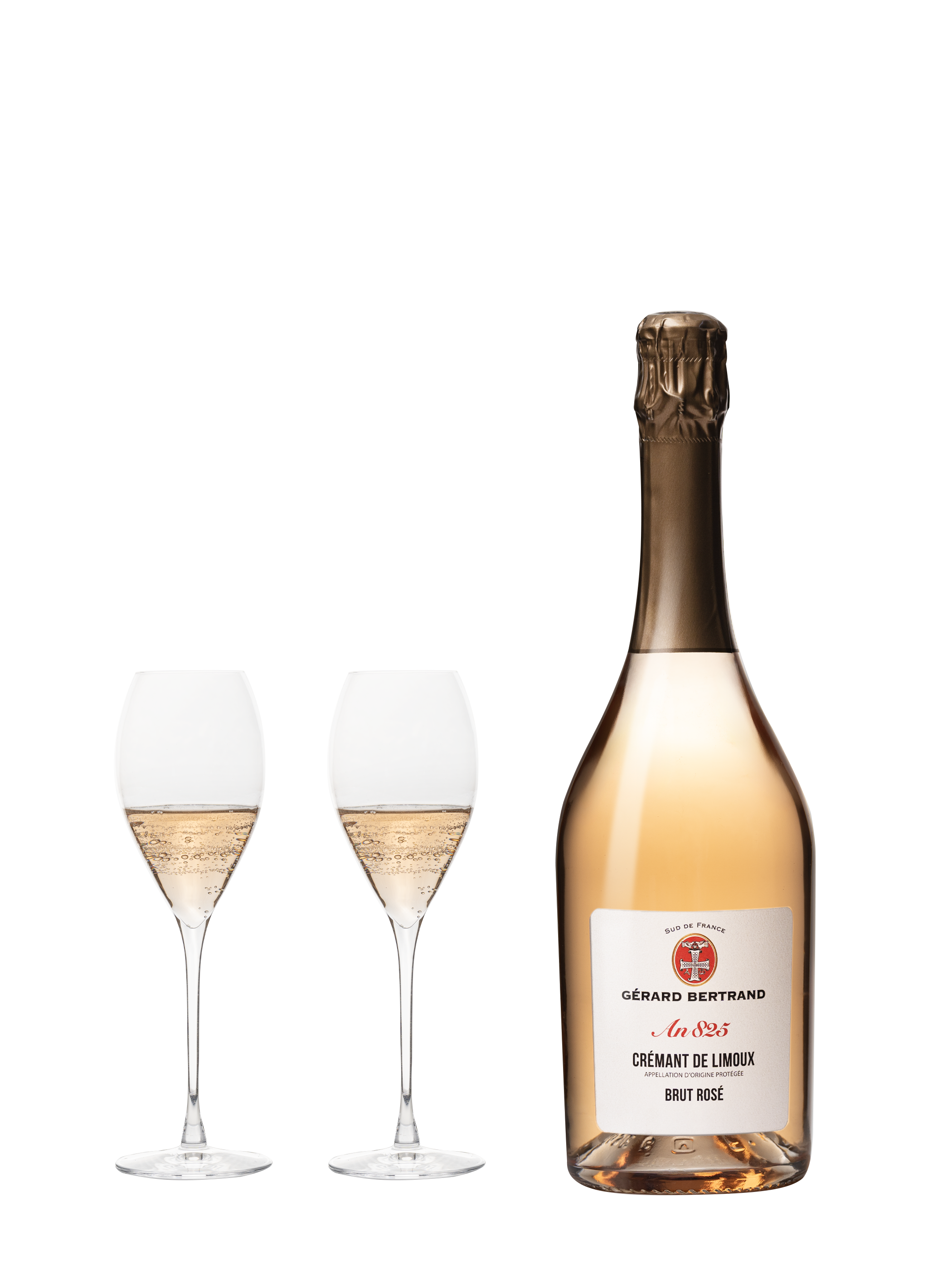
- Héritage Year 825 — rosé (Chardonnay, Chenin, Pinot Noir), a tribute to the abbey of Saint-Hilaire.
- Aigle Impérial 2015 — vintage white (Chardonnay, Chenin, Pinot Noir), certified organic and biodynamic (AB, Demeter), 92/100 from Bettane + Desseauve.
How should you serve a Crémant de Limoux?
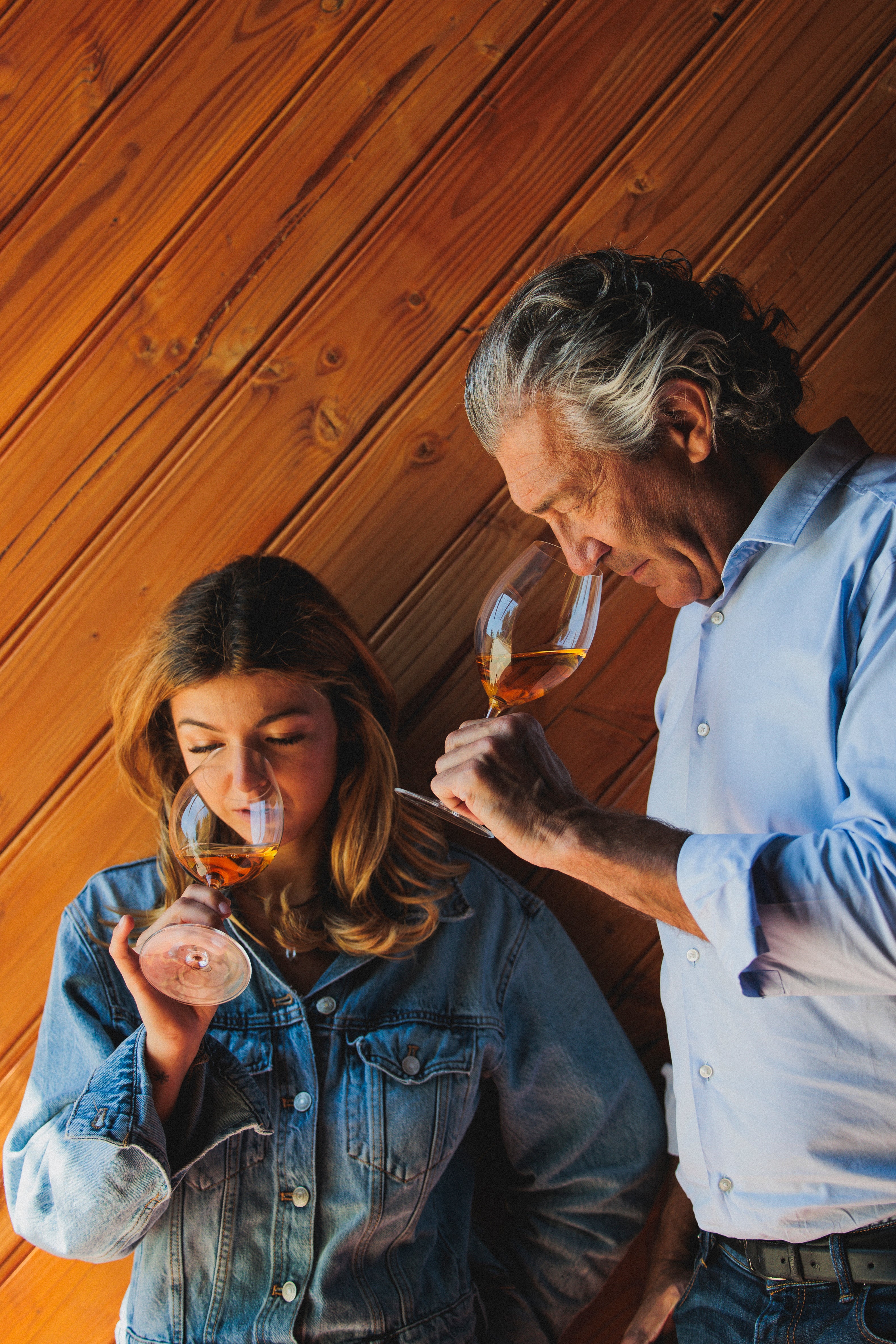
Serve chilled, between 8 and 10°C, in a white wine glass rather than a narrow flute to let its aromas shine. It pairs with oysters, shellfish, grilled fish or roast poultry; a rosé Crémant such as Ballerine goes well with a red berry tart or mildly spiced dishes.
Biodynamics and terroir
The quality of a sparkling wine begins in the vineyard: healthy grapes preserve the base wine’s natural acidity. Gérard Bertrand began converting his vineyards to organic and biodynamic farming in 2002. Certifications (AB, Demeter) vary by estate and cuvée and are listed on each wine’s product page.