
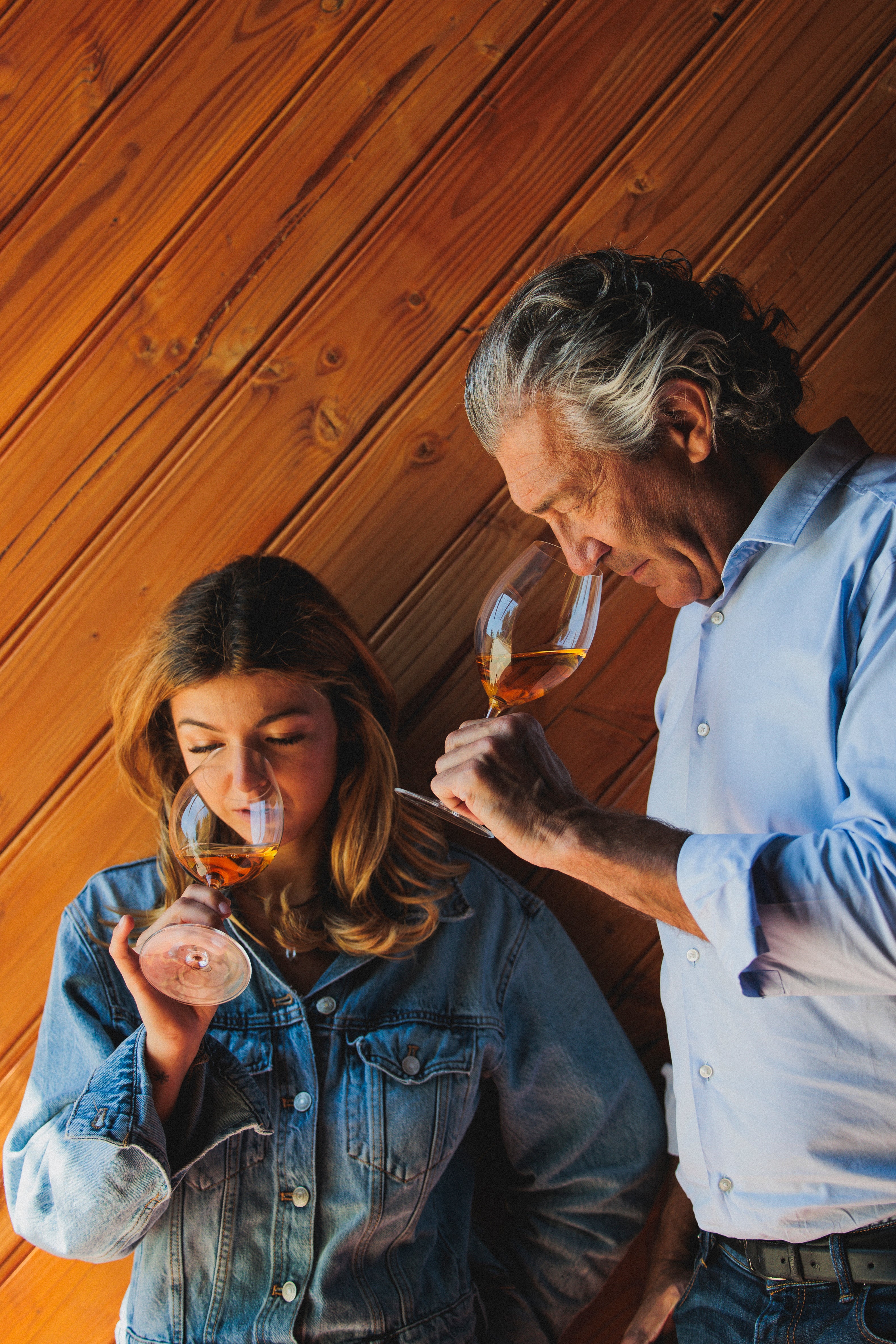
The Bertrand family
Languedoc organic wine by Gérard Bertrand
Discovering an organic wine that respects the environment

Combining the production of outstanding organic wines with respect for nature is a firm commitment for Gérard Bertrand. A man of principle and a true ambassador for environmental protection, he is now the world leader in organic wines.
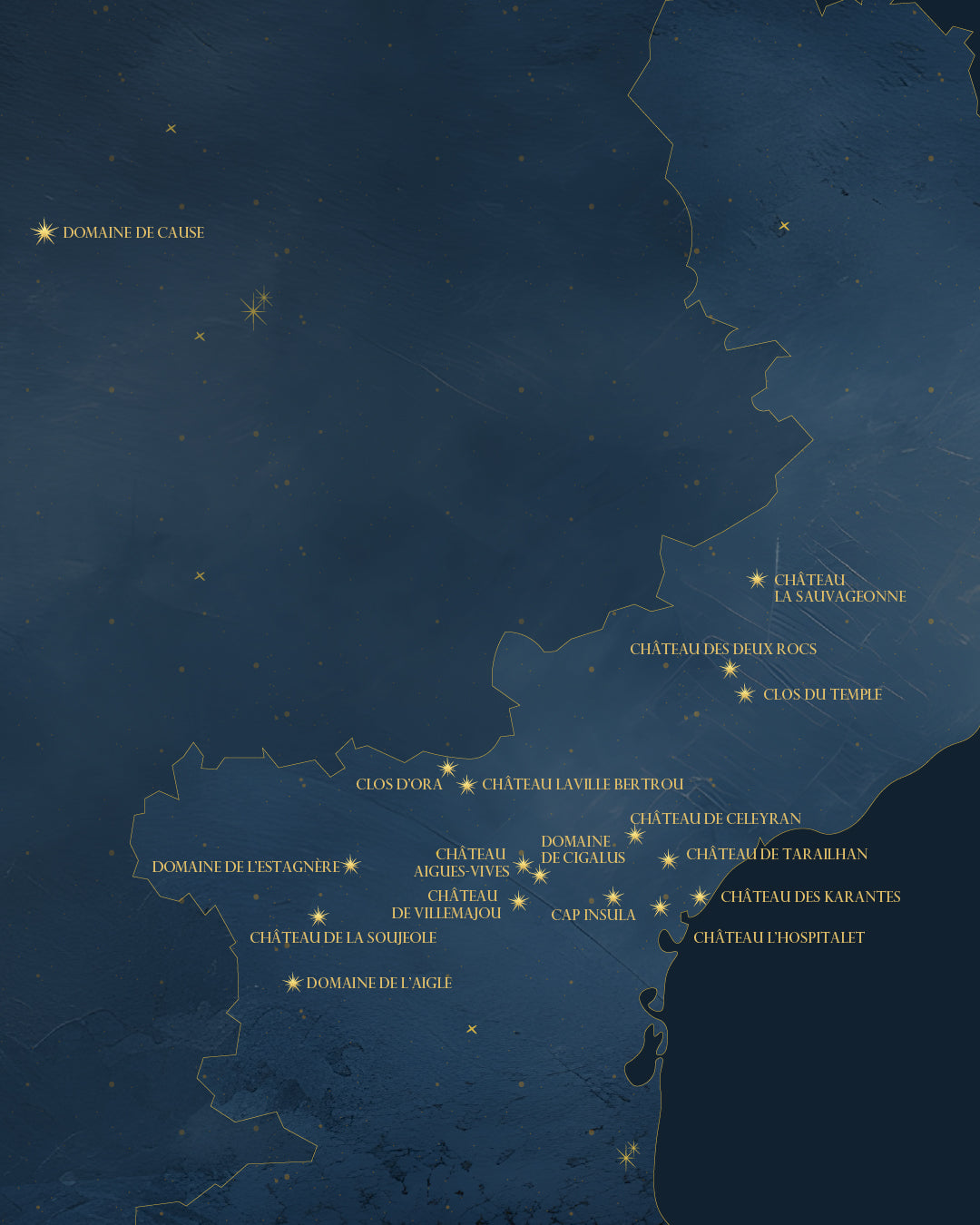
Over the years, Gérard Bertrand has taken over 14 estates across the Languedoc-Roussillon region and supported their transition to cleaner production methods. Today, that commitment has paid off: every vineyard parcel is at least AB-certified, and the wines brilliantly express the terroir they come from.
What is organic wine?

An organic wine is made according to the principles of organic farming: farming without herbicides, GMOs or chemical fertilisers. This means the winegrower must apply these principles throughout the winemaking process, from growing the vines (viticulture) to turning the grapes into wine (vinification). Organic wine is made from grapes that are themselves certified organic, as are all the additions (inputs) needed to turn the grapes into wine, such as yeasts and fining agents.
A certified organic wine is therefore made from quality grapes grown using environmentally friendly practices. Obtaining the “AB” organic label requires compliance with strict specifications established by the European Union (Regulation No 203/2012). More recently, the CAB label (Conversion to Organic Agriculture) has been introduced to identify winegrowers in the Occitanie region who have begun converting their vineyards to organic cultivation.
To ensure that organic producers follow the rules, independent bodies approved by the INAO (French National Institute of Origin and Quality) certify and monitor compliance with the label’s specifications. For organic wines from the Languedoc, these independent bodies include Ecocert, Certisud, Qualisud and Alpes Contrôles.
However, avoiding chemicals in the vineyard is not enough to produce a quality wine. Without human expertise, grape juice would inevitably turn into vinegar.
The winegrower and the oenologist therefore play a leading role in creating an organic wine.
Discover the full range and collection of organic wines from Gérard Bertrand.
What are the benefits of organic wine?

As we have seen, producing organic wine means being more environmentally friendly and more attuned to nature. That is why Gérard Bertrand now has more than 950 hectares of vineyards that are AB-certified or undergoing conversion.
But what are the benefits of a wine made using organic farming methods? And how does it differ from conventional wine?
The main advantage of a quality organic wine, as with a biodynamic wine, is that it expresses the fruit’s full potential. When grapes are treated with care as they grow, they reveal all their flavours. An AB-certified vineyard parcel offers the assurance that the vines have been cultivated consistently and in balance, with the patience to work with the plant rather than pursue productivity at any cost. With organic wine, the development of the grapes themselves matters just as much as the work done by people in the cellar. But let’s turn to the most important point: the taste!
High-quality organic wines, such as Gérard Bertrand’s Languedoc wines, are generally found to offer finer, more delicate flavours than conventional wines. Their balance of flavours is remarkable, with pronounced floral notes. One reason for this balance is that these wines rely less on alcohol for their structure than conventional wines do.
Another characteristic taste of organic wines from the Languedoc is their exceptional minerality. This is particularly noticeable in wines produced on Gérard Bertrand’s estates, such as Château de l’Hospitalet, an exceptional property in the heart of the La Clape massif, a quintessential limestone terroir.
The reason is that untreated grapes contain significantly higher concentrations of trace elements and minerals. This is what gives the wine its fresh, almost saline minerality on tasting, particularly in white wines. As we have seen, organic wine is made with a closer connection to what matters most: its fruit and its terroir. These flavours are subtle and balanced, and reveal the wine’s story.
In short, we could say that organic wine doesn’t pretend to be something it isn’t: it simply expresses what it is.
And what about biodynamics?
We are convinced that biodynamic farming in harmony with nature is the best way to produce outstanding wines from our terroirs in the South of France. That is why we began converting our estates to biodynamic farming at the Domaine de Cigalus in 2002, with all our vineyards due to be DEMETER-certified by 2023.
Find out more about biodynamic wine in the Languedoc.
Discover other types of wine:
How rosé wine is made : what goes into its production?
And to find out more about:
Gérard Bertrand wines and his expertise
The Châteaux and Estates of Gérard Bertrand
Or contact us
These wines are popular right now
Our latest news

Héritage Tautavel 2023, No. 1 in the Top 100 Best Buy Wines 2026 by Wine Enthusiast
With a score of 94/100, Héritage Tautavel 2023 claims 1st place in the Top 100 Best Buy Wines 2026 by Wine Enthusiast, an international recognition celebrating the quality and character of this cuvée.
Read the article
Autumn Wine Fair 2026: up to 15% off our exceptional wines
The Autumn 2026 Wine Fair by Gérard Bertrand is back! From 20 September to 10 October, enjoy exceptional offers on a selection of our finest vintages. With the code FAV2026, enjoy 15% off the entir...
Read the article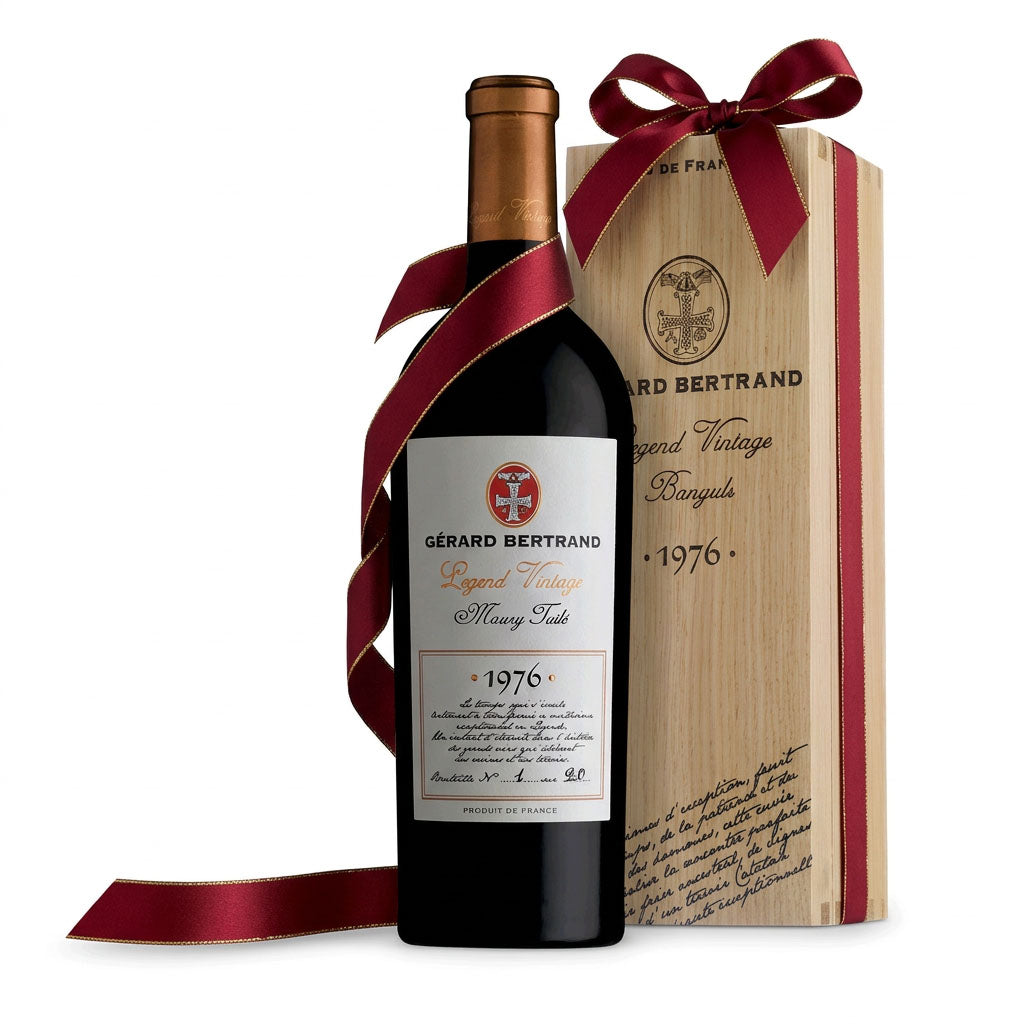
50th Birthday Gift in 2026: Offer Legend Vintage 1976 in a Wooden Box
In 2026, those born in 1976 will celebrate their 50th birthday. Discover Legend Vintage 1976, an AOP Maury natural sweet wine with a Decanter Gold Medal, available in a wooden presentation box for ...
Read the article
DELIVERY IN 48H
Order and be delivered in 2 days anywhere in France, 5 days for Europe.

Secure payment
Protected transactions for a confident shopping experience.

Customer service
A question? Need advice? Our customer service team is here for you.

quality guaranteed
Every bottle is carefully selected to offer the very best.