

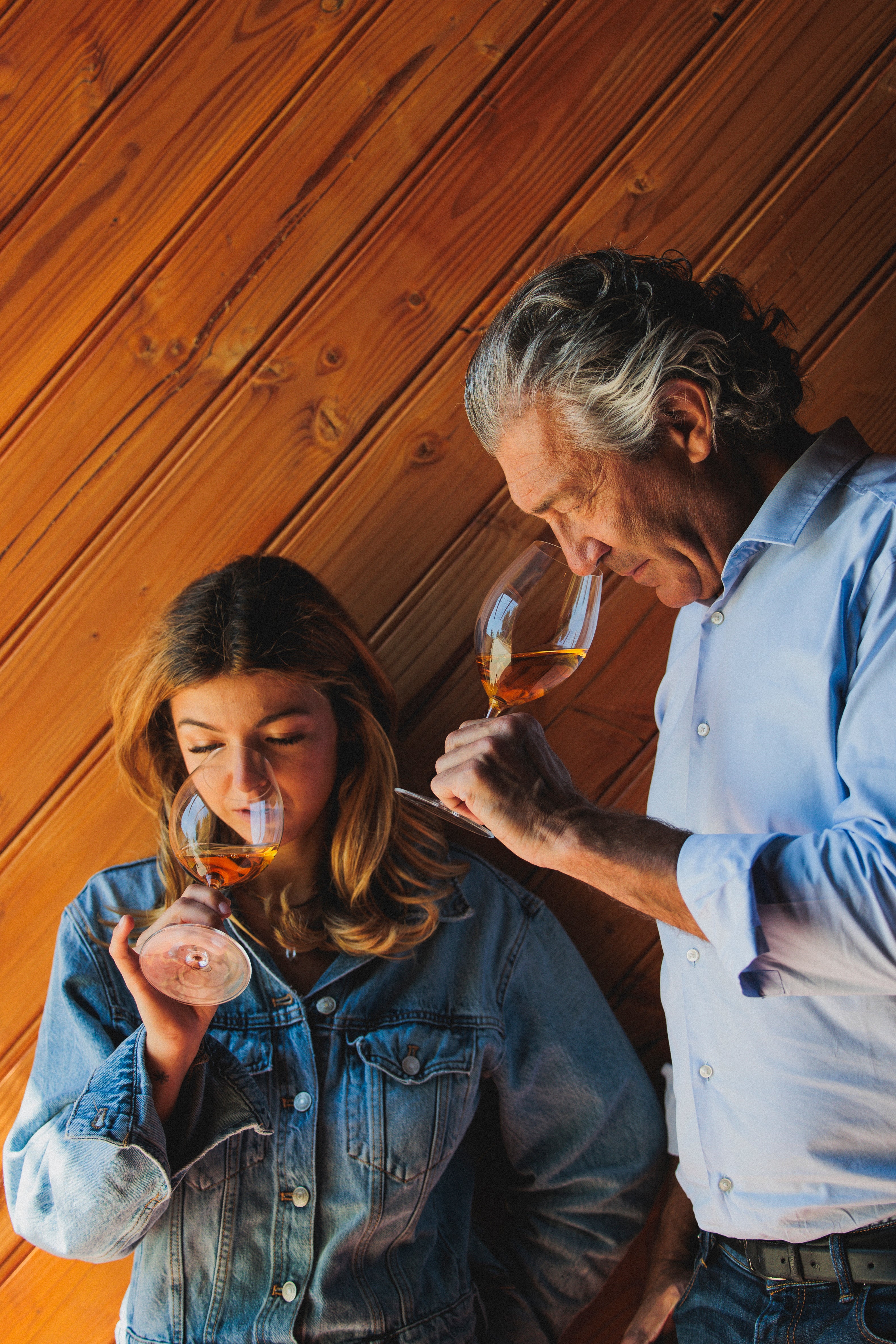
The Bertrand family
Naturally Sweet Wines vs Fortified Wines: The Differences Explained
Wine lovers are well acquainted with the diversity of the wine world, where each category of wine brings its own set of particularities and unique flavours. Among these categories, naturally sweet wines and fortified wines stand out for their specific characteristics and distinct production processes.

Origins and History of Naturally Sweet Wines and Fortified Wines
Naturally Sweet Wines
Naturally sweet wines (VDN) are a French speciality, produced mainly in the south of France, particularly in the regions of Languedoc-Roussillon and the Rhône Valley. Their history dates back to the 13th century, when the process of mutage was discovered by the monk and alchemist Arnaud de Villeneuve. This process involves adding alcohol to the fermenting must to stop the process and preserve part of the grape's natural sugar, thus creating a sweet wine.
Fortified Wines
Fortified wines, for their part, have a broader history that spans several countries. Among the most famous are Port and Madeira from Portugal, Sherry from Spain and Marsala from Italy. These wines also result from a fortification process, but they can vary considerably in terms of style and taste depending on their region of origin and the specific methods used.

Wine Production Methods
The production of naturally sweet wines involves several key stages. The grapes, generally varieties such as Muscat and Grenache, are harvested at full maturity to maximise their sugar content. After harvesting, the grapes are pressed and the juice begins to ferment naturally. Fermentation is then stopped by the addition of grape spirit, which preserves part of the residual sugar from the grape and gives the wine its characteristic sweetness. The wines are then aged in vats or barrels, often for several months or even years, before being bottled.
Fortified Wines
The production of fortified wines follows a similar process but with important variations depending on the type of wine. For Port, for example, the grape must partially ferments before aguardente (a type of grape spirit) is added to stop fermentation and preserve the sugar. Madeira wines undergo a unique ageing process through heating, which gives them great longevity and a distinct taste profile. Sherries are classified according to their style after fermentation, and some undergo ageing under a veil of yeasts (the flor) that influences their flavour and texture.
Taste Profiles

Naturally Sweet Wines
VDNs are known for their elegance and their aromatic richness. Muscat, for example, offers intense aromas of tropical fruits, flowers and honey, while Grenache can add notes of red fruits and chocolate. On the palate, VDNs are often velvety with a lovely acidity that balances their sweetness. They pair well with desserts, blue cheeses or can be enjoyed on their own as an aperitif.
Fortified Wines
The taste profiles of fortified wines vary enormously. Ports can be sweet and fruity, with aromas of black berries, plums and chocolate, or drier and more complex in Tawny styles, with notes of nuts, caramel and figs. Sherry, for its part, can range from very dry (Fino, Manzanilla) to very sweet (Pedro Ximénez), each offering a range of aromas from almonds and citrus to raisins and caramel. Madeira, with its styles ranging from dry to sweet, presents flavours of dried fruits, caramel and spices, and can age for decades without losing any of its quality.

How to taste wines?
Naturally Sweet Wines
VDNs are often used to accompany desserts such as fruit tarts, crème brûlées or chocolate cakes. Their natural sweetness and balanced acidity also make them an excellent choice with blue cheeses or veined cheeses. What is more, they can be savoured on their own as an aperitif, offering a rich and complex tasting experience.
Fortified Wines
Fortified wines are incredibly versatile. Port is a classic companion to chocolate desserts, nut tarts and blue cheeses. Dry Sherries, such as Fino and Manzanilla, pair well with tapas, seafood and olives, while sweet Sherries perfectly complement desserts and creamy cheeses. Madeira, thanks to its diversity of styles, can be served with dishes ranging from starters to desserts, offering unique and memorable food and wine pairings.
Find out more:
- Ode to sweet wines
- From grape to bottle: the process of creating sweet wine
- Do you know sweet wines?
Discover the best Gérard Bertrand wines:
These wines are popular right now
Our latest news

Last days to enjoy the wine fair
The Wine Fair ends tomorrow. You have just a few hours left to finalise your selection and check out before the offer ends. The most sought-after wines are the first to sell out: until 10 ...
Read the article
2026 24 Cuvées Advent Calendar: The New Gérard Bertrand Selection
Discover the new 2026 edition of the Gérard Bertrand 24 Cuvées Advent Calendar: 24 cuvées, 23 grape varieties and 14 certified organic or biodynamic wines, to enjoy every day in December.
Read the article
Héritage Tautavel 2023, No. 1 in the Top 100 Best Buy Wines 2026 by Wine Enthusiast
With a score of 94/100, Héritage Tautavel 2023 claims 1st place in the Top 100 Best Buy Wines 2026 by Wine Enthusiast, an international recognition celebrating the quality and character of this cuvée.
Read the article
DELIVERY IN 48H
Order and be delivered in 2 days anywhere in France, 5 days for Europe.

Secure payment
Protected transactions for a confident shopping experience.

Customer service
A question? Need advice? Our customer service team is here for you.

quality guaranteed
Every bottle is carefully selected to offer the very best.