
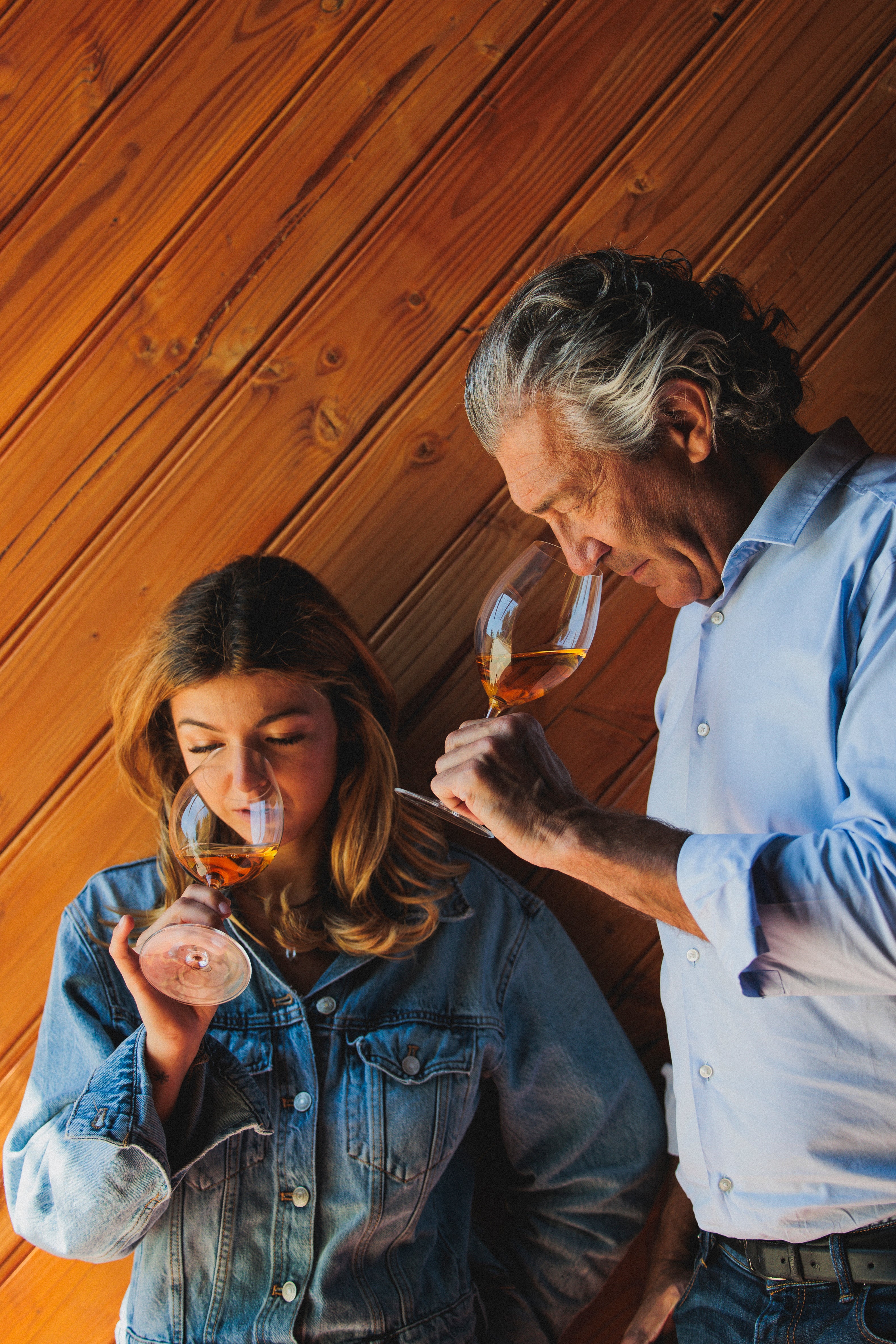
The Bertrand family
How to taste a wine: the steps to follow
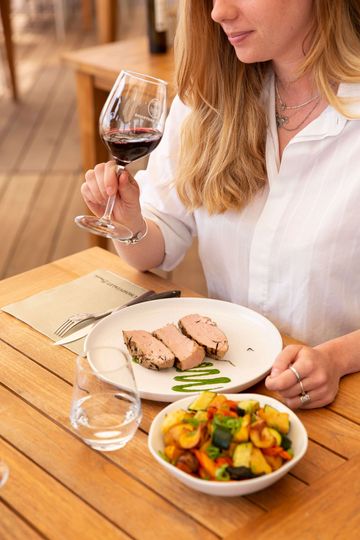
Drinking wine is one thing; knowing how to taste it is another. Such is the whole ambition of the tasting ritual, which calls upon all the senses. So how do you distinguish the main aromas and read between the lines of food pairings?
WE OBSERVE
We share a few secrets to help you understand
what lies in your glass.
As is well known, we eat and drink first with our eyes. Find a well-lit spot. Lift your glass by the stem, tilt it and turn it gently to move the liquid. Does the wine cling to the glass? Then it is full-bodied. If not, it is rather acidic.
Let us now take a look at the colour. Is it clear or intense? Limpid or uneven? What are its reflections? What are the nuances?Younger red wines tend to have a deeper colour that takes on brown and brick-red hues over time. Whites, pale in their youth, turn golden or even amber as they age.
WE SMELL
Time for the aromas.
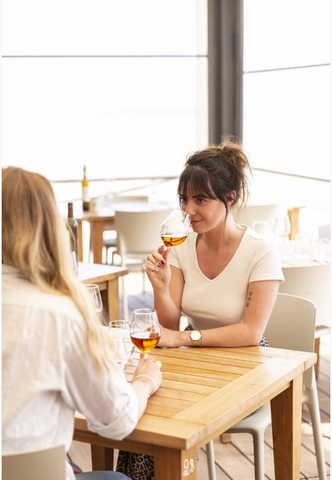
Bring the glass to your nose without swirling it. Can you smell those first aromas? You have just experienced the first nose. Now, swirl gently to reveal new aromas and inhale.
This is where red fruits, dried or candied, flowers, spices, leather, cocoa, tobacco, citrus and other indulgent notes unfold depending on the wine's family. In reds, pinot is often identified by its notes of blackcurrant or cherry. White wine, for its part, develops notably floral and fruity aromas.
WE TASTE
Last but not least.
It is time to taste.
Take a small sip and let the wine move around your mouth to detect the flavours. Are they more salty, sweet, acidic, or bitter?
Let us move on to retro-olfaction. Breathe in a little air through your mouth and breathe out through your nose. Swirl the wine around your mouth as if you were chewing it to coat your palate for at least 10 seconds. Identify the flavours you detect.
Do the notes match those your nose identified earlier? And those of the grape varieties involved? A chardonnay will reveal notes of white flowers and honey, while a grenache will tend more towards cinnamon.
And what about texture? Smooth or silky, rough or grainy: this tells you a great deal about the length of expression of the wine. After swallowing the wine, assess how many seconds the flavours linger on the palate. It is said that the longer this duration, the better the wine.
But the real question is: did you enjoy this tasting?
Feel free to leave a comment here
Photo credits: @MARIEORMIERE



Leave a comment
This site is protected by hCaptcha and the hCaptcha Privacy Policy and Terms of Service apply.