
The Bertrand family
Crémant de Limoux, Champagne or Blanquette de Limoux: what’s the difference?
Crémant de Limoux, Champagne and Blanquette de Limoux are three distinct sparkling wine appellations. Crémant de Limoux and Champagne develop their bubbles in the bottle using the traditional method, but differ in their regions and grape varieties. Blanquette de Limoux is made predominantly from Mauzac, a grape with a long history in the Limoux area, where tradition dates the first sparkling wines to 1531.
Three wines, one shared technique (a second fermentation in the bottle) and three distinct identities. Their differences begin with their origins: each appellation defines its production area, grape varieties and production rules. This guide compares them point by point, then helps you choose from our Crémants de Limoux.
The comparison at a glance
| Criterion | Crémant de Limoux | Blanquette de Limoux | Champagne |
|---|---|---|---|
| Region | Upper Aude valley, around Limoux (Languedoc) | Upper Aude valley, around Limoux (Languedoc) | Champagne, north-eastern France |
| Main grape varieties | Chardonnay and Chenin, complemented by Mauzac and Pinot Noir | Predominantly Mauzac | Chardonnay, Pinot Noir, Meunier |
| Colour | White or rosé | White | White or rosé |
| Method | Traditional: second fermentation in the bottle | Traditional: second fermentation in the bottle | Traditional, called the ‘Champagne method’ only in Champagne |
| Ageing on racks | Minimum period set by the appellation; at least 12 months for Eternal Brut Red Code | Minimum period set by the appellation | Minimum period set by the appellation, longer for vintage wines |
| Style | Fresh, delicate and taut | Fruity, with prominent apple and floral notes | Depending on each house’s blend and style |
| History | An heir to Limoux’s tradition dating from 1531 | A historic expression of Limoux sparkling wine | Sparkling wines developed later |
Crémant de Limoux: the freshness of a high-altitude blend
Crémant de Limoux is a PDO from the upper Aude valley, at the foot of the Pyrenees. Its transitional climate, influenced by both the Atlantic and the Mediterranean, preserves the grapes’ acidity, the source of the wine’s freshness. Its blend sets it apart: Chardonnay brings finesse and citrus notes, Chenin adds tension, Mauzac lends a distinctive local character, and Pinot Noir provides structure as well as the colour of the rosés.
At Gérard Bertrand, this range is expressed in several cuvées:
- Eternal Brut Red Code: a blanc de blancs made from Chardonnay, Chenin Blanc and Mauzac, aged on racks for at least 12 months.
- Aigle Impérial 2015: a vintage cuvée made from Chardonnay, Chenin Blanc and Pinot Noir, certified organic under the French AB label and by Demeter.
- Héritage Year 825: Chardonnay, Chenin Blanc and Pinot Noir, in both white and rosé.
- Sparkling Dancer Brut Rosé: a brut rosé made from Chardonnay and Pinot Noir.
Blanquette de Limoux: the character of Mauzac
Blanquette de Limoux shares the same production area as Crémant de Limoux, but not its grape blend: it is made predominantly from Mauzac, a grape with a long history in the Limoux area that gives it notes of fresh apple and flowers. It too is made using the traditional method.
It should not be confused with Blanquette made by the ancestral method. In that wine, fermentation begins in a vat and finishes in the bottle, without an induced second fermentation, giving it a fruitier style.
Champagne: a different terroir, the same method
Champagne is produced in its designated area in north-eastern France, mainly from Chardonnay, Pinot Noir and Meunier. It is made in the same way as Crémant de Limoux: a second fermentation in the bottle, ageing on the lees, riddling, disgorgement and dosage. The two wines differ in their climate, soils, grape varieties and production rules.
Saint-Hilaire, 1531: Limoux and the first sparkling wines
The history of Limoux sparkling wines is linked to the Benedictine Abbey of Saint-Hilaire, near Limoux. According to Limoux tradition, the abbey’s monks discovered a naturally sparkling wine there in 1531 — one of the earliest known sparkling wines, predating the development of Champagne wines.
This earlier date is based on tradition and local archives, not on any direct lineage between the appellations. The house pays tribute to it with Eternal Brut Red Code, which evokes the ‘World’s First Brut’ made by the monks of Saint-Hilaire.
Which should you choose?
- Fine bubbles, freshness and floral notes, rooted in the Languedoc: Crémant de Limoux, such as Eternal Brut Red Code in white or Héritage Year 825 in rosé.
- A vintage cuvée with toasted and brioche notes: Aigle Impérial 2015.
- The distinctive character of Mauzac: Blanquette de Limoux.
- A Champagne blend: Champagne.
To learn more about our approach to viticulture, discover why we choose biodynamics, or explore the Crémant de Limoux collection directly.
Frequently asked questions
Can the term ‘Champagne method’ be used for a Crémant de Limoux?
No. The term is reserved for Champagne wines. For Crémant de Limoux, the term is ‘traditional method’: the principle is the same, with a second fermentation in the bottle.
What is the ancestral method?
It is the method used for Blanquette made by the ancestral method: a single fermentation that begins in a vat and finishes in the bottle, without an induced second fermentation, producing a fruitier wine.
Do Limoux’s sparkling wines predate Champagne?
According to Limoux tradition, a naturally sparkling wine was discovered at the Abbey of Saint-Hilaire in 1531, before Champagne wines rose to prominence. The appellations remain distinct.
Which grape varieties distinguish Crémant de Limoux from Champagne?
Crémant de Limoux is blended mainly from Chardonnay and Chenin, with Mauzac and Pinot Noir. Champagne is based primarily on Chardonnay, Pinot Noir and Meunier.
Our latest news

Héritage Tautavel 2023, No. 1 in the Top 100 Best Buy Wines 2026 by Wine Enthusiast
With a score of 94/100, Héritage Tautavel 2023 claims 1st place in the Top 100 Best Buy Wines 2026 by Wine Enthusiast, an international recognition celebrating the quality and character of this cuvée.
Read the article
Autumn Wine Fair 2026: up to 15% off our exceptional wines
The Autumn 2026 Wine Fair by Gérard Bertrand is back! From 20 September to 10 October, enjoy exceptional offers on a selection of our finest vintages. With the code FAV2026, enjoy 15% off the entir...
Read the article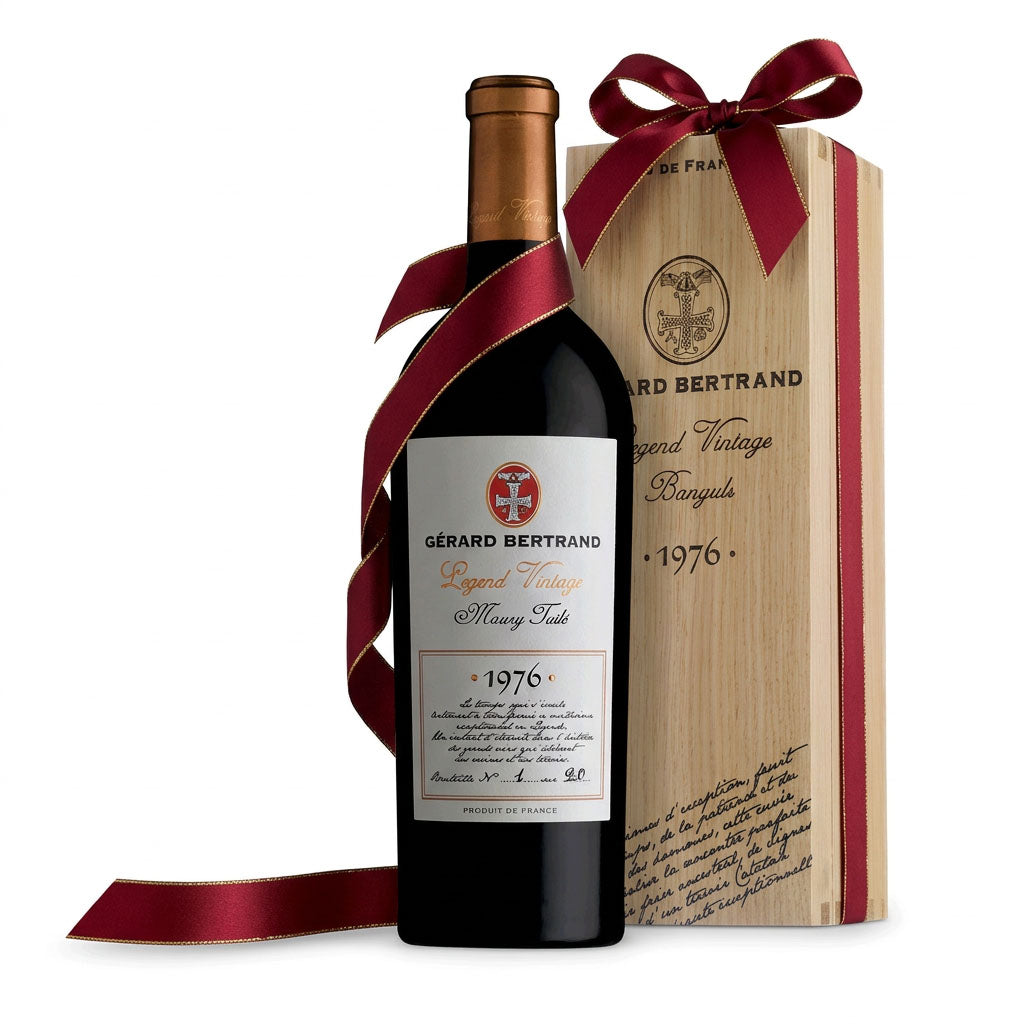
50th Birthday Gift in 2026: Offer Legend Vintage 1976 in a Wooden Box
In 2026, those born in 1976 will celebrate their 50th birthday. Discover Legend Vintage 1976, an AOP Maury natural sweet wine with a Decanter Gold Medal, available in a wooden presentation box for ...
Read the article