
The Bertrand family
Best red wine, Gérard Bertrand helps you make the right choice
In France, the best red wines are all different

By reputation, the best French red wines are often associated with Bordeaux or Burgundy, two wine regions that produce an incredible number of fine wines, such as Pommard and Nuits-Saint-Georges in Burgundy, and Saint-Emilion Grand Cru and Pessac-Léognan in Bordeaux. Yet limiting yourself to just these two regions when choosing the best French red wine would be a real mistake. Many other terroirs produce outstanding wines, particularly in Alsace, Provence, the Rhône Valley and Languedoc-Roussillon.
France has a great diversity of climates and landscapes, which explains why it produces such varied wines, each with its own characteristics.
Languedoc-Roussillon wines or Côtes du Rhône wines, for example, offer a particularly appealing balance of power and delicacy. Wines such as Beaumes de Venise, Gigondas and Vacqueyras come from some of the most prestigious appellations.
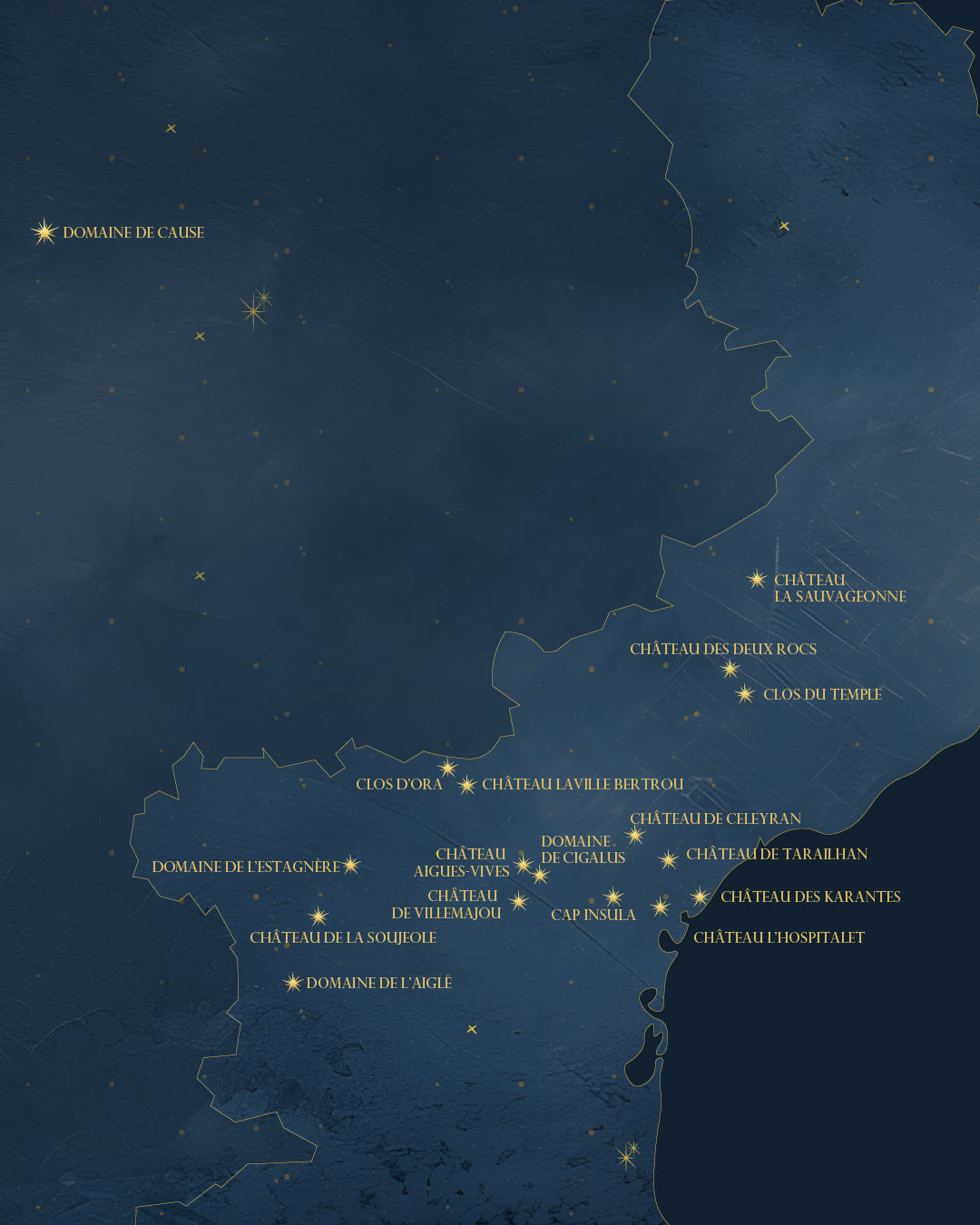
Further south, in Occitanie, grapes enjoy abundant sunshine thanks to the Mediterranean climate, producing generous, powerful and smooth wines. This is particularly true of the Gérard Bertrand Grands Vins selection, which brings together bottles counted among the best French red wines. Examples include wines from Château l'Hospitalet, Château de Villemajou and Château de la Soujeole: three exceptional wines, each with a unique character. Vintage and grape variety are also factors to consider when choosing a bottle of red wine.
While the vintage brings subtle variations in taste and flavour, the grape varieties used unmistakably reveal their full character:
These include:
- The Pinot Noir (Haute Vallée de l'Aude), supple and delicate
- The Merlot (Aude Hauterive, Malepère), rounded, soft and silky
- The Syrah (Minervois La Livinière, La Clape), powerful yet supple
- The Grenache (Terrasses du Larzac), full and robust
- The Carignan (Corbières-Boutenac), tannic, powerful and structured
Explore all our red wines and Gérard Bertrand wine collections.
Conventional or organic red wine?

Whether choosing a conventionally produced red wine or an organic red wine, one question to ask when searching for the best red wine is how it is made, from growing the vines through to winemaking. In recent decades, new, more environmentally friendly growing methods have emerged, offering consumers greener alternatives such as organic wines and biodynamic wines.
Today, visionary winemakers with strong environmental convictions, such as Gérard Bertrand, specialise in producing exceptional red wines using organic and biodynamic methods. Examples include the Grands Vins from Château L'Hospitalet (AOP La Clape) and Château La Sauvageonne (AOP Languedoc), two high-quality wines made according to biodynamic principles.
When looking for the best red wine, organic red wines are now an appealing alternative, more in tune with changing attitudes towards humanity’s impact on the environment.
Discover our various descriptive pages on red wine:
Red wine in France
Discover also:
The orange wine
The rosé wine or the best rosé wine
And learn more about Gérard Bertrand wines:
His Languedoc-Roussillon wine estates
His expertise
These wines are popular right now
Our latest news

Last days to enjoy the wine fair
The Wine Fair ends tomorrow. You have just a few hours left to finalise your selection and check out before the offer ends. The most sought-after wines are the first to sell out: until 10 ...
Read the article
2026 24 Cuvées Advent Calendar: The New Gérard Bertrand Selection
Discover the new 2026 edition of the Gérard Bertrand 24 Cuvées Advent Calendar: 24 cuvées, 23 grape varieties and 14 certified organic or biodynamic wines, to enjoy every day in December.
Read the article
Héritage Tautavel 2023, No. 1 in the Top 100 Best Buy Wines 2026 by Wine Enthusiast
With a score of 94/100, Héritage Tautavel 2023 claims 1st place in the Top 100 Best Buy Wines 2026 by Wine Enthusiast, an international recognition celebrating the quality and character of this cuvée.
Read the article
DELIVERY IN 48H
Order and be delivered in 2 days anywhere in France, 5 days for Europe.

Secure payment
Protected transactions for a confident shopping experience.

Customer service
A question? Need advice? Our customer service team is here for you.

quality guaranteed
Every bottle is carefully selected to offer the very best.