
The Bertrand family

WINEFOODMUSIC LIVE - YANN ARTHUS-BERTRAND

Yann Arthus-Bertrand is a French photographer, reporter, filmmaker and environmentalist.
His book "The Earth Seen from Above" (1994), from which a documentary was made in 2004, is a worldwide bestseller.
Gérard Bertrand: Hello everyone and welcome to this sixth Wine Food & Music live event, today at château l'Hospitalet. Today is Biodiversity Day and we have a special guest of honour, our friend Yann Arthus Bertrand — how are you, Yann?
Yann Arthus Bertrand: Hello everyone, thank you for the invitation — I'm delighted to be speaking from the top of my tree.
Gérard Bertrand: So yes, I saw you were in a hut — are you at home, 15 metres up?
Yann Arthus Bertrand: It's the only place at home where 4G works. I have a terrible internet connection, so I'm glad to be here.
Gérard Bertrand: So let me introduce our friends: Chef Laurent Chabert — what have you made for us today, Chef?
Chef Laurent Chabert : I've prepared the first tomatoes from the garden with a few flowers; then we're going to make a vegetarian burger with aubergine and tomatoes with a little salad, radishes and beetroot, and I made an onion and pink curry sauce and another aubergine with black curry. And then, for dessert, a little pot of chocolate and avocado cream with a crumble.
Gérard Bertrand: So yes, this is a 100% vegetarian menu for you, Yann, because I know you've become a vegetarian.
Yann Arthus Bertrand: Are you not a vegetarian, Gérard?
Gérard Bertrand: I eat meat once a week; with everything I do I need a little — I've cut down and I eat it once a week. My wife has been a vegetarian for a long time, so at home it's all vegetables. I see you have some bread in front of you — do you make bread too?
Yann Arthus Bertrand: That's the bread I made this morning and I was quite surprised to see how easy it is to make bread — it's a truly incredible pleasure. I must say that during my lockdown I learnt to cook; I cooked every day for my grandchildren because, as my children were doing school at home, they didn't have time to cook. So, using an app on the internet, I cooked and I loved doing it.
Gérard Bertrand: So today we've changed the rhythm of the show a little, dear friends, as we've brought the musicians into the kitchen. We have the pleasure of welcoming our friend Dominique Rieux, who is also the man who has been programming the jazz festival for 17 years, and Jean-Michel Cabrol, the king of the saxophone — so hello gentlemen, how are you?
Dominique Rieux & Jean-Michel Cabrol : Very well!
Gérard Bertrand: Could you welcome us with a little music?
Dominique Rieux & Jean-Michel Cabrol : With pleasure!
Gérard Bertrand: That will inspire the Chef!
Live music
Gérard Bertrand: Bravo!
Yann Arthus Bertrand: Thank you very much!
Gérard Bertrand: We never stop trying to innovate — the Chef's restaurant is officially still closed since it only opens on 2 June, so I recommend you come and have a great time. Dominique is from Carcassonne and Jean-Michel is from Gruissan; they actually tour the entire world and have worked with many well-known artists, including Michel Leeb's tour, and so on. And I told the Chef: you have to cook to music. So, Yann, what does this special biodiversity day symbolise for you? You are very committed — I saw that you had spoken out saying it was truly an emergency. Do you have a special message for today?
Yann Arthus Bertrand: You know, I feel like we've been repeating the same things for so many years. The WWF estimates that we've lost 60% of living species in 40 years — just imagine that, it's unimaginable. And then there's Covid; we can talk about biodiversity because if it really did come from a pangolin, the Chinese have opened up an enormous breach of responsibility. I'm going to be very harsh and blunt about this, but the Chinese have been getting on my nerves for thirty years — rhino horn, shark fins, elephant ivory — even though they've signed international treaties, they don't respect them, and in Chinese markets you find enormous numbers of animals listed on the IUCN red list. I think that in Africa it's difficult to stop poaching because there is this surveillance of corruption, but in China they could have done something much more radical to ban it — they're going to do it now, but I'm quite angry.
Gérard Bertrand: They themselves have problems with swine fever — you know they've lost 30 or 40% of their herd, which is the basis of their food supply. Don't you think that we have an overall problem, in that I believe that if we don't reduce the consumption of animal proteins by 30% we won't get there, because with a population of 8 billion, we're already in trouble.
Yann Arthus Bertrand: You know, first of all, since I was born the world's population has multiplied by 4 — it's crazy. When I was born there were 2 billion people and now we're approaching 8 billion. Meat consumption has multiplied by eight and fish consumption by eight, and that is down to industrial farming — energy has changed the world and we really need to pay close attention to that. It is estimated that, today, the gases — the figures are debatable between Llifehouse and the American NGOs, but very serious ones — they estimate that industrial farming gases
 Biodynamics
Château de Villemajou
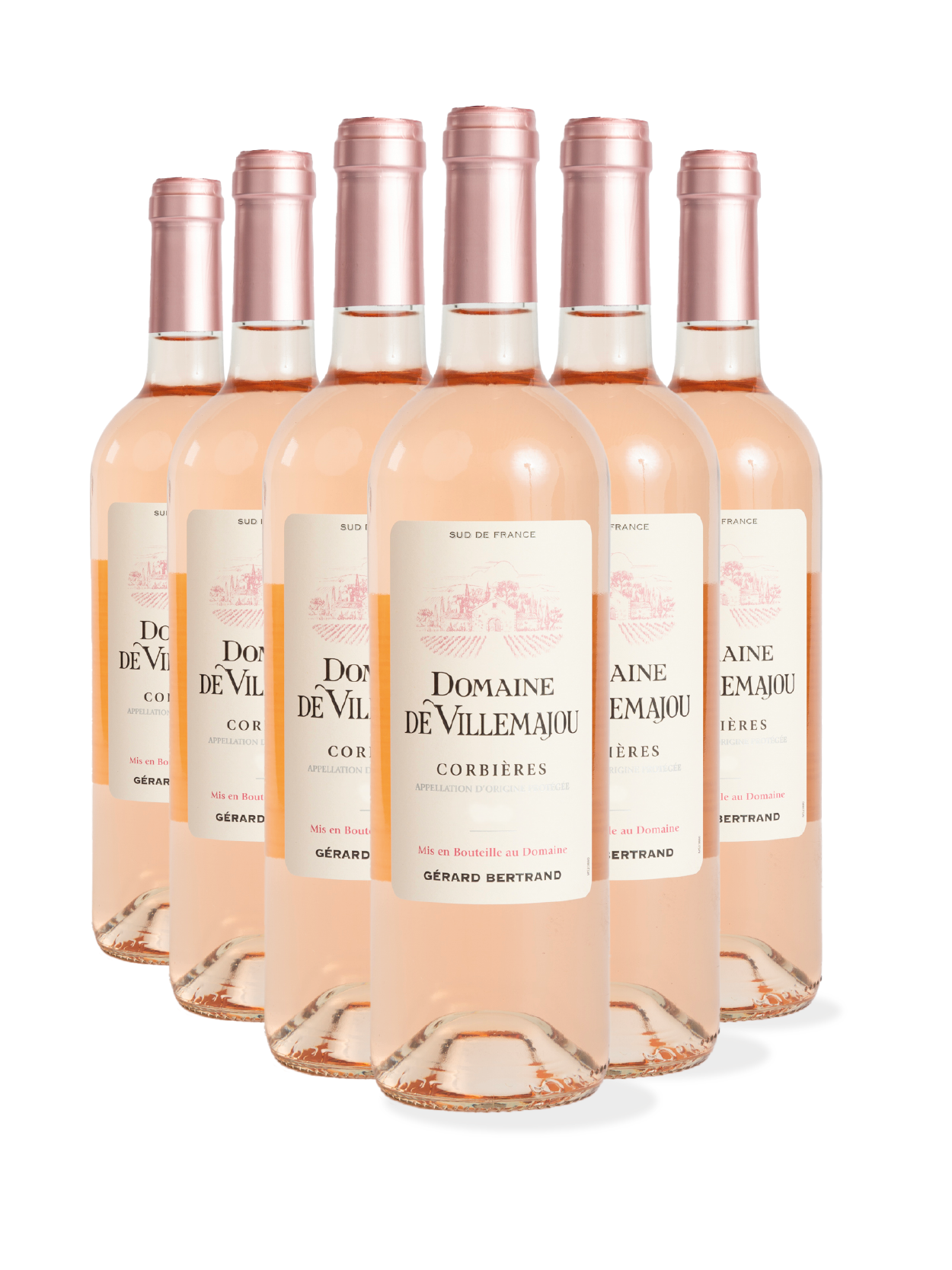
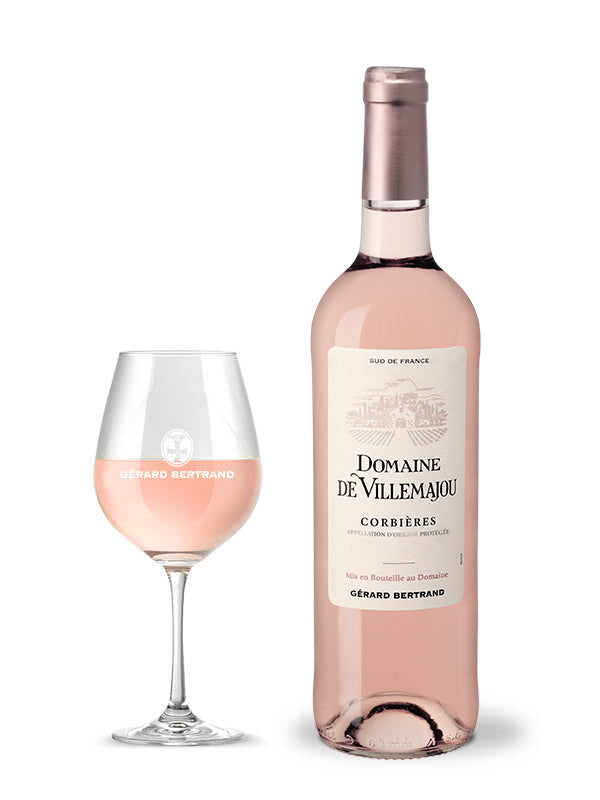
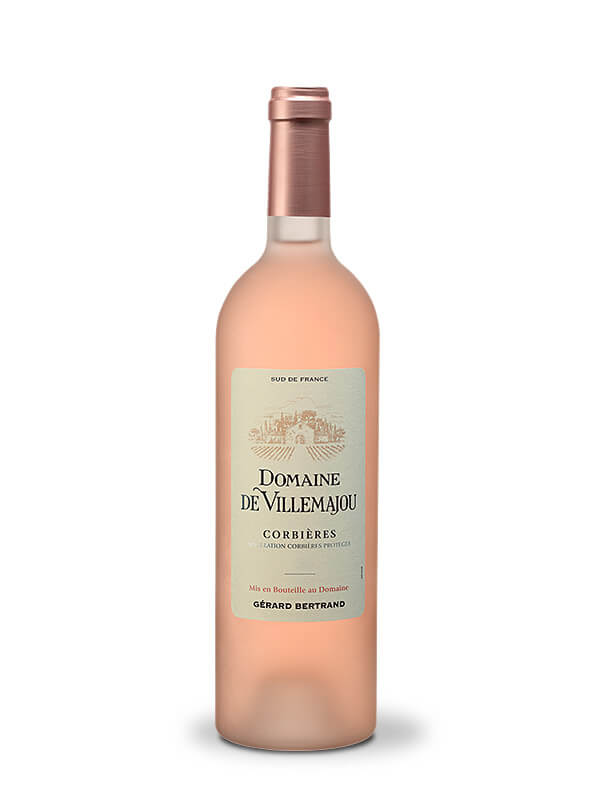
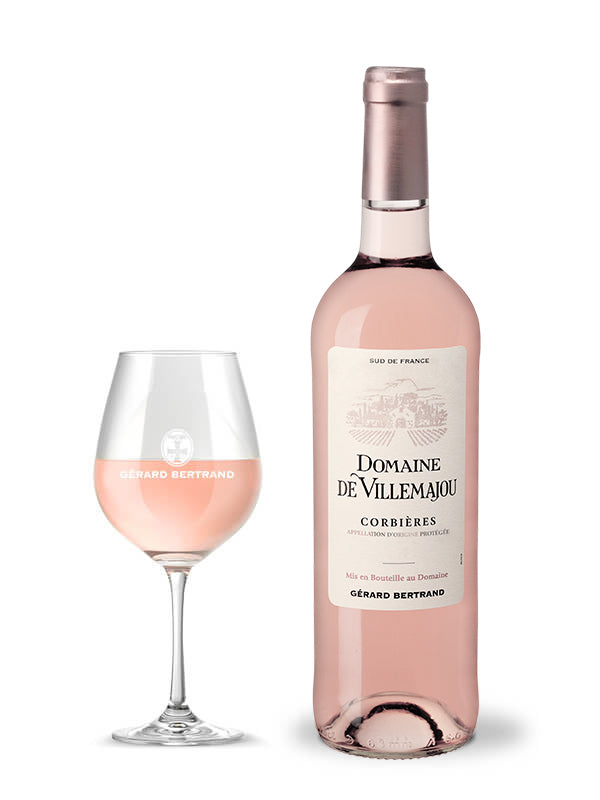
Domaine de Villemajou AOP Corbières 2025 – set of 6 bottles 75cl rosé wine
Biodynamics
Château de Villemajou