
The Bertrand family
Vintage 2021: retrospective and perspectives at the gérard bertrand châteaux and domaines
Richard Planas, director of the Gérard Bertrand Châteaux and Domaines, looks back in detail at the 2021 vintage. Climatic conditions, soil preparation and biodynamic inputs — a review of 2021 from the vineyard's perspective.
The essentials
- A dry year with marked and highly localised thermal variations.
- A vintage in which the "vigneron's" work bears fruit, heading into harvest with well-balanced and fully healthy vines.
- Balanced crop load, freshness in the wines, fine acidity: the ingredients of a vintage that will stand the test of decades.
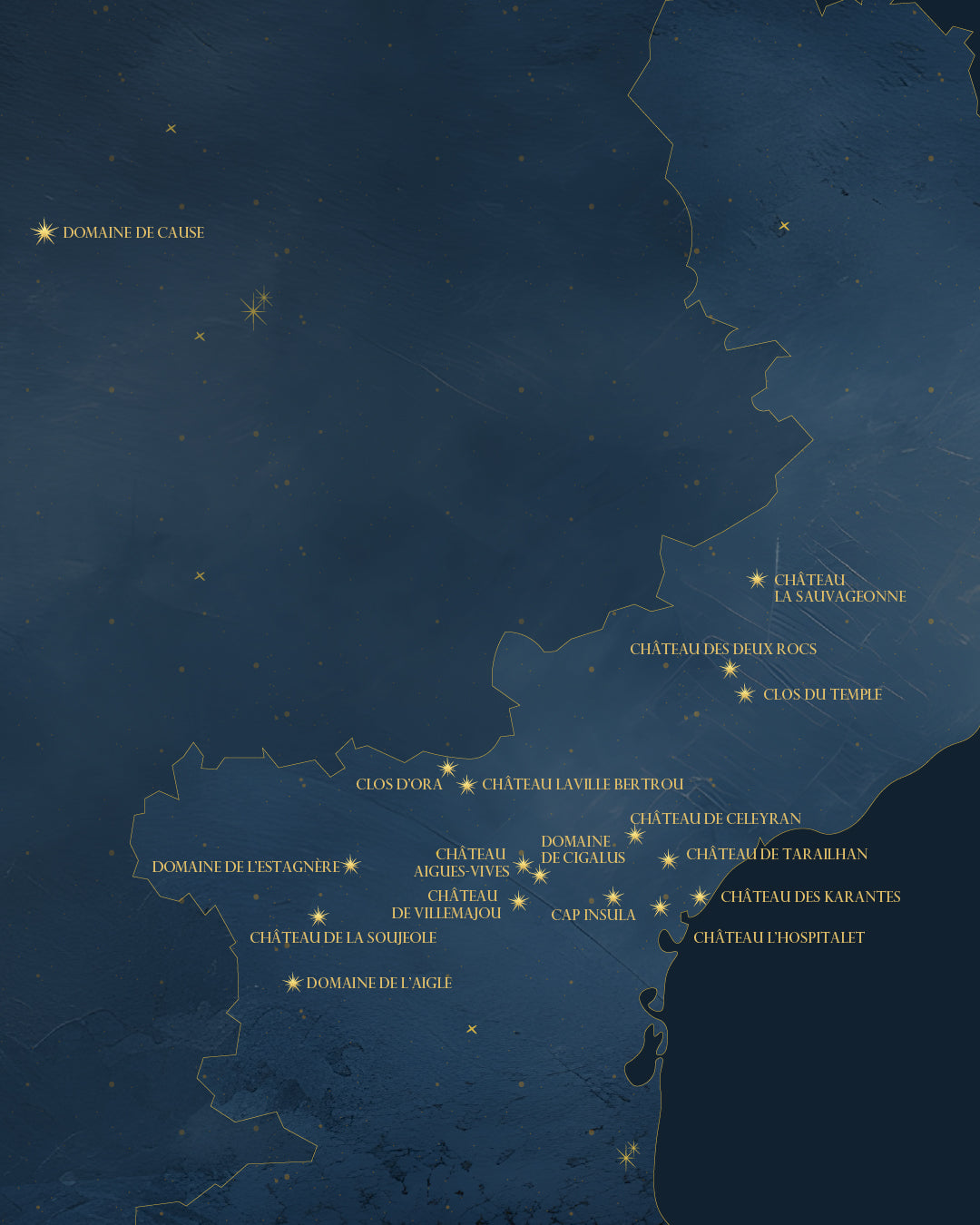
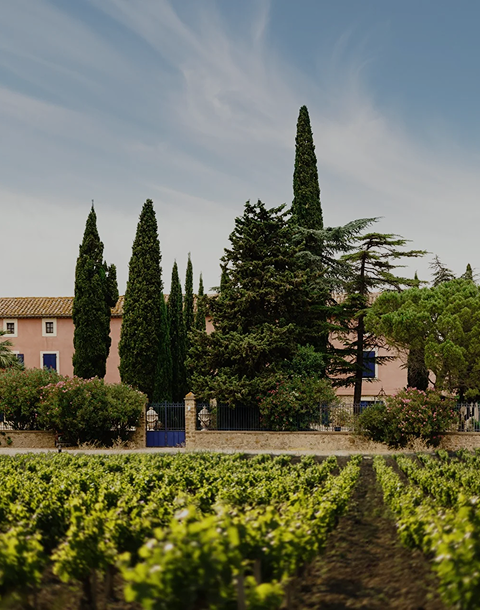
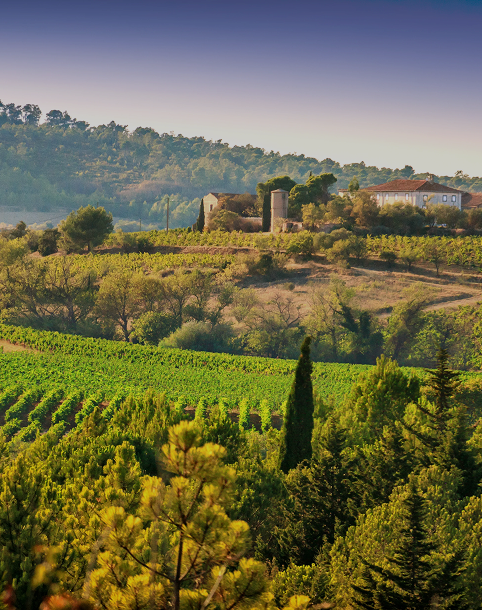
- A vintage with a typically Mediterranean profile, with localised climatic and hydric nuances — particularly in spring and at the beginning of summer — that will assuredly highlight the typicity of each of our terroirs: from the Pyrenean foothills (Domaine de l'Aigle, Château la Soujeole, Domaine de l'Estagnère), to the coastal zones (Châteaux L'Hospitalet, Château des Karantes, Domaine de Tarailhan), via the foothills of the Larzac (Château La Sauvageonne, the Clos du Temple, Château des Deux Rocs), the Montagne Noire (the Clos d'Ora and Château Laville Bertrou) and the Corbières (Château de Villemajou and Cigalus).
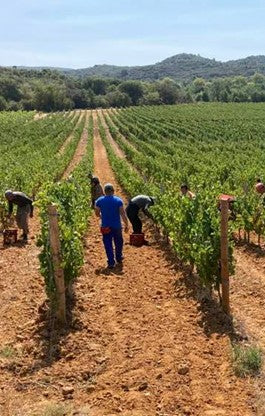
Harvest began on 26 August 2021, with the Sauvignon and Chardonnay from Cigalus, on a fine sunny day with no excessive heat.
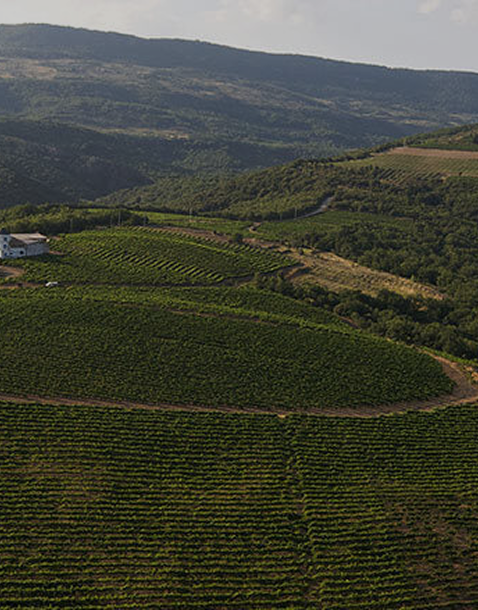
Across all Gérard Bertrand Châteaux and Domaines, the health of the vineyard is excellent, with a very good grape-to-leaf surface balance: the ideal conditions to allow ripeness to develop through to the end of harvest.
Acidity levels are high, which promises fully aromatic and well-balanced whites and reds with superior ageing potential.
Overview of the 2021 viticultural campaign
From a general perspective across our 16 Châteaux and Domaines, with low rainfall (-30 to -50% compared to 2020), 2021 ranks among the driest years. Everywhere, rain fell mainly in autumn and at the beginning of winter; in spring, the picture is nuanced depending on the area: rainfall was heavier inland than on the coast and in the Corbières, before a general and marked "summer dry spell".
A mild winter, relatively dry, led to an early budburst of the vines. We had worked the green manures by sowing every other row in autumn.
In spring, we will remember the night of 7 to 8 April 2021, when a mass of cold air from northern Europe swept over the Languedoc while the vine had already begun its vegetative cycle. We protected the most exposed plots on the lower slopes by lighting nocturnal braziers, thereby mitigating the effect of this spring frost on the forthcoming harvest.
When they were affected by this episode, our vines were in very good health. They came through it valiantly, supported with biodynamic care. We were able to observe a few weeks later that we had succeeded in preserving the harvest potential in line with our quality requirements across all our Châteaux & Domaines, limiting losses to 20% of the harvest.
In the weeks that followed, flowering took place without excessive heat. It took its time. The spring rains, few and far between overall, fell at just the right moment, to take over from the autumn and early-winter rains, and ensure good mineral nutrition, essential for growth and the development of the leaf surface area (the photosynthetic engine of ripening).
We prepared the soils through regular work following the principle "one hoeing is worth two waterings": a technique that promotes the proper functioning of the soils by limiting competition between vines and natural ground cover, and stimulates nutrition through the addition of organic matter to the soil. This also encourages soil mineralisation and the assimilation of naturally present minerals to allow the harmonious development of the vine.
We combined this active presence with the application of biodynamic foliar preparations (horn manure and horn silica, herbal teas and essential oils) and the reasoned input of organic fertiliser to achieve vegetative development in keeping with the crop load.
Summer was temperate, alternating between seasonally sunny periods and cooler spells. However, without rain, water management was a key challenge in running the vineyard. We therefore anticipated the destruction of cover crops to limit competition.
Viticultural yield is established over 2 years; as the previous vintage was generous in water, floral initiation took place under optimal conditions. A fairly generous cluster set was thus observed very early on. The precise monitoring work carried out by our pruners encouraged the right number of buds on each vine stock, in line with our ultra-premium wine objectives.
We are heading into harvest with a well-calibrated "crop load and leaf surface" balance and functional foliage to ensure grape ripening under the best possible conditions.
The end of the season is taking shape with the famous "Indian summer", ensuring an exceptional health status of the grapes so that they can soak up the sun before being vatted.
This year in particular, the applications of biodynamic preparations played a particularly important role in supporting the harmonious development of the vegetation, and in stimulating the natural defences against climatic stresses (water stress) or parasitic pressures.
They followed one another in rhythm with the seasons and planetary alignments: Maria Thun horn manure compost in autumn, horn manure in spring and horn silica during the vine's vegetative growth phases…
The biodynamic applications (based on herbal tease, and fermented plant extracts) played a stimulating role for the vitality of the foliage. This year, depending on the estate, yarrow, nettle and oak bark enabled our vines to adapt to intense heat, dry periods or maritime humidity.
The health of the vineyard is proving excellent, thanks — as every year — to daily vigilance and attention, accompanying each vine stock through to harvest by walking every plot.
Harvest has only just begun and we are putting all our energy into this final straight to bring the grapes to their optimum ripeness and reveal all the aromas of an exceptional vintage.
Follow our harvest, estate by estate:
- Welcoming the future at Cigalus... bunch by bunch
- Welcoming the future... one plot at a time with biodynamics
- Domaine de l'Aigle, at the crossroads of Terroirs and Climates



Leave a comment
This site is protected by hCaptcha and the hCaptcha Privacy Policy and Terms of Service apply.